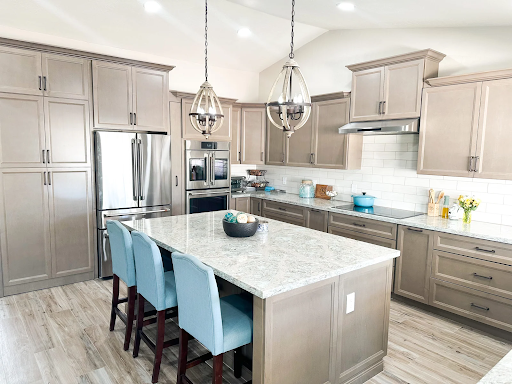
Replacing an extractor beneath kitchen cabinets can appear straightforward until the old unit comes down. Hidden duct connections, uneven cabinet bases, and unexpected wiring can complicate the job. Selecting an under-cabinet exhaust hood works best when the existing installation is inspected before a replacement is ordered.
Establish What Is Already There
First, determine whether the current appliance vents outdoors or recirculates air into the kitchen. A cabinet above the cooking area may conceal a duct, but it can also contain no functioning exhaust connection.
Record the old unit’s width, depth, height, outlet position, and electrical arrangement. An under-cabinet exhaust hood should fit the available space while meeting the requirements of both the ventilation appliance and cooking appliance. Similar external dimensions do not guarantee compatible mounting points.
Check Cabinet Condition and Support
Cabinet bases must be sound enough for the selected equipment and its specified fixing method. Look for moisture damage, loose joints, uneven surfaces, and previous modifications. Do not assume old fixing holes are appropriate for the replacement.
Ask the installer whether additional support or cabinet alterations are needed. This is easier to address before the new appliance arrives. Consider the condition of surrounding surfaces as well, especially if grease has accumulated around the old installation.
Compare Width, Depth, and Projection
Width is only one part of fit. Depth determines how much of the cooking surface sits beneath the intake. Body height affects the clearance remaining above the cooktop, while projection changes access to controls and nearby cupboard doors.
The supplied collection includes widths from 30 to 60 inches across its main under-cabinet selection. It also includes different profiles and blower arrangements. Check the exact dimensions of each under-cabinet exhaust hood rather than assuming all products in a width category share the same body.
Choose the Ventilation Arrangement
Ducted Operation
A ducted appliance carries captured air outdoors. Its installation requires a compatible outlet, correctly sized ducting, and a suitable external termination.
Recirculating Operation
A recirculating appliance passes air through filters before returning it to the kitchen. It can reduce grease and some odours but does not exhaust heat or humidity outside.
Convertible Designs
Certain models support either arrangement using specified accessories. The collection lists optional charcoal-filter conversion equipment, but compatibility must be confirmed for the exact product.
Choosing an under-cabinet exhaust hood therefore involves checking the complete ventilation path, not simply deciding whether ductwork would be convenient.
Match Airflow to the Application
The source selection includes examples rated at 600, 900, 1,000, and 2,000 cubic feet per minute, as well as variable-capacity models. These ratings describe particular configurations rather than a universal requirement.
Cooking intensity, capture coverage, installation height, and duct resistance all influence suitability. A larger motor cannot fully correct an unsuitable duct or insufficient canopy coverage. Have the installer evaluate those factors together.
Multiple fan speeds can improve day-to-day flexibility. Compare sound information at useful operating settings rather than treating the maximum rating as the whole performance story.
Confirm Clearances and Electrical Needs
Follow the appliance manuals for mounting height and required clearances. If the cooking appliance and hood instructions appear incompatible, resolve the conflict before installation instead of choosing an arbitrary distance.
Check whether the under-cabinet exhaust hood is designed for a plug connection or hardwiring. Any new or altered wiring should follow applicable electrical requirements. Keep the connection accessible as the installation instructions require.
Make Cleaning Practical
The collection describes removable stainless-steel baffle filters and LED lighting across various models. Confirm which features belong to the selected configuration and whether surrounding cabinetry will obstruct filter removal.
For recirculating equipment, the source recommends replacing charcoal filters every three to six months, depending on use. Follow the individual manual if its instructions differ. Grease filters and charcoal filters have different functions and should not be maintained interchangeably.
Review the Installation Before Signing Off
Test every speed and light after fitting. Listen for unexpected vibration and ask the installer to check the duct connections and outdoor damper where applicable. Keep the instructions, warranty information, and installation records together.
A well-installed under-cabinet exhaust hood should be straightforward to operate and maintain. Addressing small issues during handover is easier than investigating them after the kitchen returns to normal use.
Conclusion
A good replacement starts with measurements, sound cabinetry, compatible ducting, safe clearances, and accessible maintenance. Buyers considering a 30-inch under-cabinet hood should apply the same checks rather than assuming a familiar width guarantees an easy swap. Inspect first and select the appliance around the installation it actually needs.
