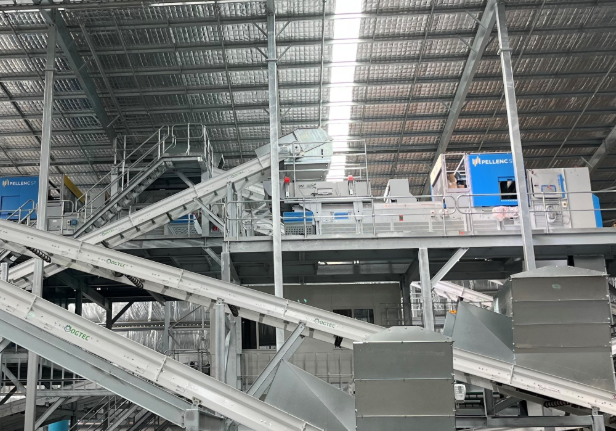
Australians buy a great deal of clothing and discard a great deal of it, and the volume has become a national waste problem. Turning worn garments and fabric offcuts back into usable fibre requires specialised sorting, cutting, and processing steps. Understanding textile recycling in Australia starts with the scale of the problem, then moves to the machinery and safety controls that make recovery practical. This article covers each key stage in plain, practical terms for businesses, processors, and local councils.
How Large the Clothing Waste Problem Is and Why Recovery Matters
Australia is among the world’s highest per-person consumers of clothing, with the average person buying 56 new items a year. More than 200,000 tonnes of clothing end up in landfill annually, and over 100,000 tonnes of used textiles are exported.
In response, the national clothing stewardship scheme Seamless began operating in July 2024, aiming for a circular clothing industry by 2030. For anyone following textile recycling in Australia, that policy shift highlights the need for domestic processing capacity.
How Textile Streams Are Prepared Before Fibres Can Be Recovered
Processing handles discarded garments, fabric scraps, and other post-consumer and industrial textiles. Sorting comes first, and optical sorters using near-infrared (NIR) and camera technology can separate material by type, composition, and colour.
Cutting and tearing follow sorting. Any textile waste recycling machine line typically includes rotary cutters to reduce material to smaller pieces, a blending box to even out consistency, and tearing machines whose spiked rotating drums separate the fibres.
What Removes Buttons and Zips and How Bales Are Produced
Hard Point Removal
Garments carry buttons, zips, and other hard objects that must be removed from the stream. This is handled through density separation, magnets, and screening.
Baling and Handling
Balers compress processed fibre into compact bales, which makes storage and transport more efficient. Operators comparing textile recycling in Australia can note that baled material is easier to move to manufacturers for further processing.
Why Dust Control and Fire Prevention Deserve Careful Design
Textile processing creates fine dust, so dust is captured at each machine and moved pneumatically to a filtration system. Spark detection and sprinkler systems should also be included to reduce fire risk.
Plant design matters as much as the machines themselves. Safety design is a core part of industrial waste management, because fibre dust and moving equipment add hazards beyond the usual handling risks.
How Businesses and Councils Can Plan a Recovery Project
Output quality drives equipment choices, since cleaner fibre suits reintegration into manufacturing and supports the circular economy.
Planning starts with the material. Teams exploring textile recycling in Australia should map the streams they handle and the volumes expected before choosing equipment.
Useful questions at the planning stage:
1. Which streams are processed, and in what volumes?
2. What fibre quality does the end market require?
3. How will dust, sparks, and fire risk be controlled?
4. How will bales be stored and transported?
Conclusion
Building an efficient textile recycling operation requires reliable equipment, coordinated processing stages, and careful attention to material handling and safety. At Ogtec, we provide recycling solutions designed to support textile sorting, cutting, tearing, and baling, helping businesses develop processing lines suited to their operational requirements. Our equipment range allows you to evaluate options based on material types, processing volumes, and facility needs. Explore our textile recycling solutions to identify suitable equipment for your project and support a more organized, resource-conscious recycling process.
