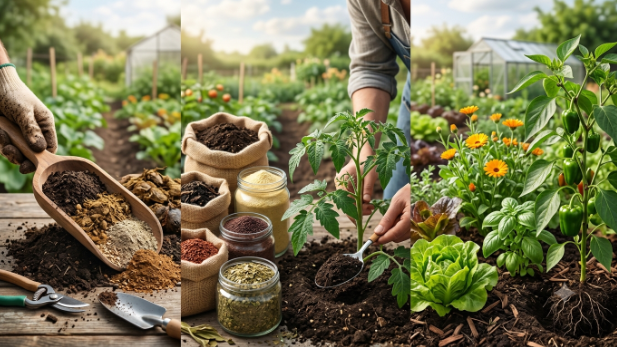
Healthy plant growth depends on more than sunlight and water. Soil fertility, nutrient availability, drainage, organic matter, and microbial activity all influence how effectively plants develop roots, leaves, flowers, and fruit. For gardeners who want to support soil health over time, organic fertilizer for plants can offer a slower and more biologically focused approach to feeding compared with many fast-release synthetic products.
The right fertilizer, however, depends on what is being grown and what the soil already contains. Understanding NPK ratios, nutrient release, organic matter, and plant-specific needs can make fertilizer selection more accurate and prevent unnecessary overfeeding.
What Is Organic Fertilizer for Plants?
Organic fertilizer for plants is generally made from naturally derived plant, animal, or mineral materials rather than primarily relying on synthetically manufactured nutrient salts. Examples can include compost, manure, bone meal, kelp products, seed meals, and neem cake.
These materials often release nutrients more gradually as they break down in the soil. This differs from many water-soluble fertilizers that make nutrients available relatively quickly.
Some commercially available organic products use neem-derived ingredients. For example, neem cake fertilizer may contain nitrogen, phosphorus, potassium, and organic matter while being suitable for garden beds, containers, flowerbeds, and lawns. Certain formulations may also carry certifications such as OMRI listing for organic production.
Why Does the NPK Ratio Matter?
NPK stands for nitrogen, phosphorus, and potassium, the three macronutrients most commonly displayed on fertilizer labels.
Nitrogen is strongly associated with leafy and vegetative growth. Phosphorus contributes to important plant processes including root development and energy transfer, while potassium plays a role in water regulation, enzyme activity, and overall plant function.
Different organic fertilizer for plants products may therefore contain very different NPK ratios. A balanced 7-7-7 fertilizer, for example, provides equal labelled percentages of nitrogen, phosphate, and potash, whereas a 2-1-1 neem cake product provides proportionally more nitrogen.
The highest nutrient numbers are not automatically the best choice. Fertilizer should match the needs of the plant and existing soil fertility.
Should Different Plants Receive Different Fertilizers?
Yes. Different crops can have different nutrient demands throughout their growth cycles.
Leafy vegetables often benefit from sufficient nitrogen because their harvested portion consists largely of vegetative growth. Flowering plants may require a different nutrient balance, while fruiting crops can have changing nutrient requirements as they move from establishment to flowering and fruit development.
Commercial organic fertilizer ranges often reflect these differences by offering formulations for vegetables, flowers, tomatoes, or general garden use. For instance, available neem-based blends include a balanced 7-7-7 vegetable fertilizer, a 7-5-3 flower formulation, and a 3-1-1 general-purpose blend.
Selecting organic fertilizer for plants according to plant type can therefore be more effective than applying one high-strength formula everywhere.
What Is the Benefit of Slow-Release Feeding?
Slow nutrient release can help plants receive nourishment over a longer period.
Organic materials generally need to decompose or interact with soil organisms before all of their nutrients become available. This can produce a steadier feeding pattern compared with highly soluble fertilizers.
Some neem-based fertilizers are specifically formulated as slow-release products, gradually providing nutrients while adding organic material to the soil.
For gardeners, this can reduce the need for very frequent applications. However, slow release also means that nutrient deficiencies may not be corrected instantly. This is why observing plant health and following application instructions remains important.
How Does Organic Matter Help Soil?
Fertilizer is often discussed only in terms of nutrients, but organic matter can also improve soil properties.
Organic material can influence soil structure, water retention, aeration, and microbial activity. In sandy soil, organic matter may help retain moisture and nutrients. In heavier soils, it can contribute to better structure and root-zone conditions over time.
An organic fertilizer for plants containing plant-based organic material can therefore support both nutrient supply and soil condition.
Neem cake products, for example, are promoted for their organic-matter content and their ability to support microbial activity in soil.
Is More Fertilizer Always Better?
No. Excess fertilizer can cause problems even when the product is organic.
Too much nitrogen can encourage excessive leafy growth at the expense of flowers or fruit. High nutrient levels can also contribute to imbalances in the root zone, while repeated unnecessary applications may waste money and increase nutrient runoff.
The safest approach is to follow the product’s recommended application rate and adjust according to soil conditions and plant performance.
Gardeners establishing a new vegetable bed or dealing with recurring plant problems may also benefit from a soil test. Testing can reveal nutrient deficiencies, pH issues, and other conditions that cannot be identified reliably by appearance alone.
How Should Organic Fertilizer Be Applied?
Application methods vary by formulation.
Granular products may be mixed into soil before planting or applied around established plants. Some neem cake fertilizers, for example, can be incorporated several inches into garden soil or used in containers and flowerbeds. Certain products can also be prepared as a soil drench according to their specific directions.
An organic fertilizer for plants should generally be distributed evenly rather than concentrated against stems or roots unless the label specifically directs otherwise.
Watering after application may help move nutrients into the root zone and begin the breakdown process. Always follow the exact instructions supplied with the fertilizer, since concentration and application rates vary significantly among products.
Does Organic Fertilizer Work for Container Plants?
Organic fertilizers can work well in containers, but container gardening requires additional care.
Potted plants have a limited amount of soil, so nutrient levels and moisture conditions can change quickly. Overapplication may therefore be more problematic than in large garden beds.
Some neem-based fertilizers are specifically described as suitable for pots and containers as well as outdoor beds.
When using organic fertilizer for plants in containers, gardeners should pay close attention to recommended quantities and avoid assuming that a larger dose will produce faster growth.
Conclusion
Choosing fertilizer effectively begins with understanding plant needs rather than simply selecting the product with the highest nutrient numbers. NPK balance, soil condition, nutrient-release speed, crop type, and application method all influence how well organic fertilizer for plants will perform. When selecting an organic plant fertilizer, gardeners should also consider whether the formula is appropriate for vegetables, flowers, containers, lawns, or general soil improvement instead of treating every organic product as interchangeable. A thoughtful fertilizing strategy combines appropriate feeding with good watering practices, suitable soil conditions, and regular observation. By focusing on both nutrient supply and long-term soil health, gardeners can create more stable growing conditions and reduce the risk of unnecessary or excessive fertilizer use.
