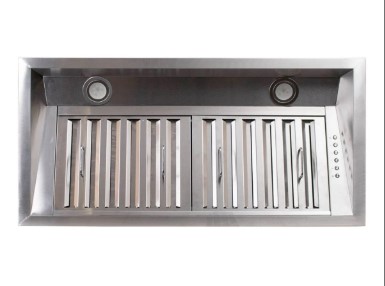
Some kitchens are designed around custom cabinetry, wood surrounds, or decorative hood shells that hide the working ventilation system from view. In those spaces, a range hood vent insert becomes an important solution because it provides the mechanical performance while allowing the visible design to stay clean and tailored. It is a practical choice for homeowners who want strong ventilation without giving up a custom-built look.
An insert may be less visible than a full exposed hood, but choosing the right one still requires careful planning. Width, cutout dimensions, blower strength, access for cleaning, and compatibility with the surrounding hood structure all affect how successful the final installation will be. Because the unit is built into another structure, precision matters more than many buyers expect.
What An Insert Does
A vent insert is the working core of the ventilation system. It is installed inside a custom hood frame or cabinet so that the visible exterior can match the kitchen style. This allows designers and homeowners to create a built-in look while keeping the key functions of capture, filtration, lighting, and airflow where they belong.
That flexibility makes inserts especially useful in kitchens where exposed stainless steel is not the desired aesthetic. Traditional, transitional, and fully custom interiors often benefit from the hidden appearance an insert provides.
Why Accurate Measurements Matter
With a standard exposed hood, buyers usually focus first on width and airflow. With an insert, internal fit becomes just as important. The range hood vent insert has to work with the exact dimensions of the custom shell, including depth, width, blower housing space, and access points for controls and filters.
Before ordering, it helps to confirm the internal opening, surrounding material thickness, and any design features that may affect installation. Taking shortcuts at this stage can create expensive problems once cabinetry has already been built or finished.
Performance Beyond The Cutout
Even though the insert is concealed, it still needs enough power to suit the cooktop below. Buyers should compare airflow, fan settings, lighting, and noise expectations just as they would with any other hood. If the cooking style includes frequent high heat, grilling, or heavy sautéing, a weak insert may struggle to keep the kitchen comfortable.
Maintenance access also matters. Filters should be easy to remove and clean, and the controls should feel intuitive once the hood is fully installed. A hidden appliance still needs to function smoothly in daily use.
Design Coordination And Long-Term Value
One reason people choose inserts is that they give the kitchen a more intentional architectural look. Cabinet makers and designers can wrap the ventilation system in wood, plaster, or other materials that support the style of the room. When done well, the result feels integrated instead of appliance-driven.
That design benefit is strongest when the technical planning is equally strong. A well-chosen insert should deliver reliable performance for years while preserving the clean visual effect that custom kitchens aim for.
Conclusion
A successful insert installation depends on more than selecting the right width. It requires careful measurement, realistic airflow planning, and a design that still allows convenient maintenance after the unit is built in. Buyers who approach the project with both performance and cabinetry details in mind are more likely to get the seamless result they want. For kitchens that do not need concealed ventilation, a wall-mounted ducted range hood can remain a strong alternative when a visible appliance better suits the space.
