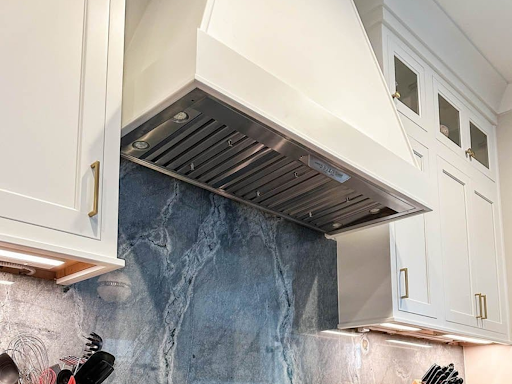
A 48-inch vent hood is engineered for large residential kitchens, professional-style ranges, and high-BTU cooking appliances that generate significant amounts of smoke, grease, heat, and airborne contaminants. Selecting the right hood requires evaluating airflow capacity, duct configuration, blower design, filtration technology, mounting style, and construction materials to ensure optimal ventilation performance.
Unlike smaller ventilation systems, a 48 inch vent hood is designed to provide a larger capture area that effectively contains cooking emissions across wider cooking surfaces. Professional-grade models are commonly available with airflow capacities ranging from 900 to over 2,000 CFM, making them suitable for serious home chefs and luxury kitchen installations.
Determining the Correct CFM Rating
The most important performance specification for a 48 inch vent hood is airflow, measured in Cubic Feet per Minute (CFM).
Typical airflow recommendations include:
- 900–1200 CFM for most residential cooking
- 1200–1800 CFM for professional gas ranges
- Up to 2000 CFM for heavy-duty cooking applications
- Higher airflow for grilling, wok cooking, and frequent frying
Proper CFM selection ensures effective smoke and grease removal while maintaining balanced kitchen ventilation.
Choosing the Right Blower Configuration
Modern 48 inch vent hood models are available with multiple blower options.
Common blower types include:
- Internal blowers
- Dual internal blowers
- Inline blowers
- Remote exterior blowers
Dual-motor systems provide increased airflow for larger cooking appliances, while remote blowers can help reduce operational noise.
Ducted vs. Convertible Ventilation
Installation requirements play a significant role in ventilation performance.
Ducted Systems
- Exhaust cooking contaminants outdoors
- Deliver maximum airflow efficiency
- Recommended for high-output cooking
- Require properly sized ductwork
Convertible (Ductless) Systems
- Use charcoal filters for air recirculation
- Suitable where exterior venting is unavailable
- Require periodic filter replacement
Many premium models offer both installation options depending on kitchen design.
Filter Technology
Efficient grease filtration protects blower components while improving airflow.
Most premium 48 inch vent hood units feature:
- Stainless steel baffle filters
- Commercial-style grease filtration
- Dishwasher-safe filter assemblies
- Optional charcoal filters for ductless operation
Baffle filters are generally preferred for high-performance residential kitchens due to their durability and grease-capturing efficiency.
Construction Materials
Professional ventilation systems are commonly manufactured using:
- 430 stainless steel
- Premium 304 stainless steel
- Welded steel housing
- Commercial-grade blower assemblies
Higher-grade stainless steel offers improved corrosion resistance, particularly in outdoor or high-moisture environments.
Installation Considerations
Proper installation directly impacts ventilation efficiency.
Important factors include:
- Hood width matching the cooking surface
- Recommended mounting height above the cooktop
- Correct duct diameter
- Minimal duct bends
- Proper makeup air where required by code
- Secure electrical connections
Following manufacturer installation specifications helps maximize airflow and minimize operating noise.
Maintenance Requirements
To maintain peak performance:
- Clean baffle filters regularly.
- Replace charcoal filters if operating in recirculating mode.
- Inspect ductwork for airflow restrictions.
- Clean interior grease accumulation.
- Verify blower performance during routine maintenance.
Regular servicing helps extend equipment life and maintain consistent ventilation efficiency.
Conclusion
A 48 inch wall mount range hood is an excellent solution for kitchens with professional-style ranges that require wide coverage and high airflow capacity. Selecting the right 48 inch vent hood involves evaluating CFM ratings, blower configuration, ducting requirements, filtration technology, and installation specifications to ensure reliable long-term ventilation performance.
