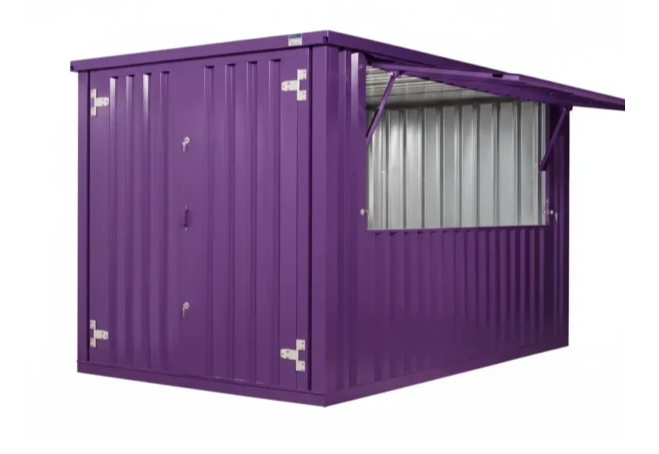
Small business owners and event organizers are increasingly looking for portable structures that offer professional functionality without the cost or commitment of a traditional storefront. A 10-foot kiosk unit fits this need well, offering a compact footprint that still includes the essential features required for retail, food service, or ticketing operations. Understanding its dimensions, construction, and intended uses can help buyers decide whether this size is the right fit for their business.
Dimensions and Footprint
A 10-foot kiosk typically measures around 10 feet in length by 7 feet 6 inches in width and height, giving it an external footprint of roughly 75 square feet. This size is small enough to fit into tighter spaces, such as parking lots, event grounds, or narrow urban lots, while still providing enough interior room for a service counter and basic equipment. In many jurisdictions, including Albuquerque and other parts of New Mexico, structures under 120 square feet fall under certain building permit exemptions, though local setback rules, HOA requirements, and commercial use regulations still need to be checked before installation.
Construction and Durability
These kiosks are generally built from galvanized or galvalume steel walls, often in the 20-gauge range, paired with a slightly heavier steel roof for added structural strength. A powder-coated finish, applied both inside and out, helps protect against corrosion and weathering, which matters for units that may be used outdoors year-round. Weatherproof stainless steel locks are also a common feature, adding a layer of security for cash, inventory, or equipment stored inside. Because many models ship flat-packed, they can be transported more easily than a pre-assembled structure and are typically light enough, at around 1,000 pounds, to be moved with basic equipment like a forklift.
Key Features That Support Business Use
What separates a 10-foot kiosk unit from a standard storage container is its retail-ready design. A large fold-up service window, often paired with an integrated awning, allows staff to interact directly with customers while providing some shelter from sun or light rain. A built-in service counter with storage space underneath adds functional workspace without requiring additional furniture. LED lighting packages, both interior and exterior, extend usability into evening hours, which matters for events or extended retail hours. Some units also offer pre-wired electrical setups, though the specific electrical package usually needs to be confirmed with the seller before ordering.
Common Use Cases
This size and style of kiosk tends to suit a specific range of business needs rather than general storage. Pop-up retail operations, seasonal sales, and product testing in new markets are common applications, since the structure can be installed and removed relatively quickly compared to a permanent build-out. Event vendors at festivals, fairs, or sporting events also benefit from the portability, as the kiosk can be transported between locations using forklift pockets or crane lifting points built into the design.
Assembly and Practical Considerations
Assembly time for a flat-packed 10-foot kiosk unit is generally quick, often estimated at 30 to 60 minutes with two people working on level ground. This is a meaningful advantage for businesses that need to set up quickly for a limited-time event or season, rather than committing to a lengthy construction process. Buyers should also factor in additional costs beyond the base unit price, such as delivery, installation, and any site preparation like a gravel pad, since these can vary depending on distance and site accessibility.
Final Thoughts
For businesses that need a portable, secure, and customer-facing structure without the overhead of a permanent building, this size strikes a practical balance between footprint and functionality. Those specifically researching a 10-foot kiosk unit in ABQ will find that local permit exemptions, delivery logistics, and installation pricing are worth confirming directly with a supplier before finalizing a purchase, since these details can vary based on exact location and site conditions.
