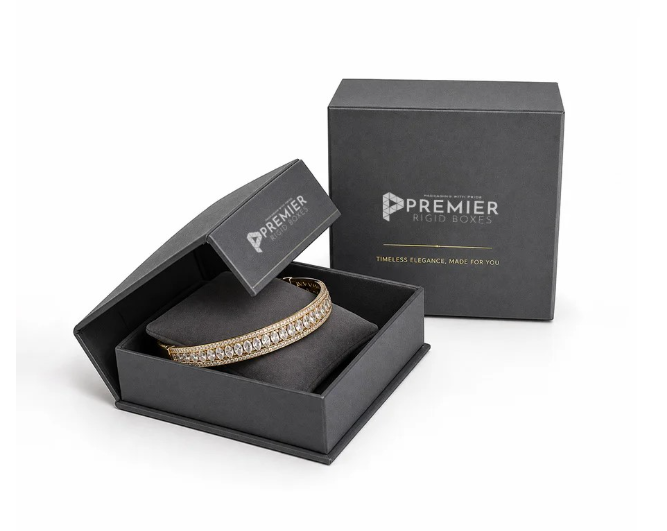
A bangle looks simple enough sitting on a shelf, but it’s actually one of the trickier jewelry shapes to ship without a scratch. It’s rigid, it’s round, and it doesn’t sit flat or fold the way a chain or a pair of earrings does. Drop one into a box without the right interior setup, and it’ll slide, knock against the walls, and pick up marks it never had before it left the workshop. The box itself matters, sure, but what’s inside that box – the insert holding the bangle in place – usually ends up doing more of the actual protective work than people realize.
Why the Insert Matters More Than the Box Shell
A sturdy outer box protects against crushing and rough handling. It doesn’t do much about what happens on the inside if the piece is free to move around. Even in the toughest box, a bangle bouncing around will still knock against the sides during shipping, and for anything polished, plated, or set with stones, that’s exactly how small scratches and chips happen.
This is where the interior insert takes over. Its whole job is to hold the piece exactly where it’s supposed to sit and keep it from moving, no matter how the box gets tossed around between the warehouse and someone’s front door. A well-fitting insert does more to protect a bangle than a slightly thicker box wall ever could.
Common Types of Interior Inserts
A few insert styles show up again and again across bangle packaging, each with its own trade-offs:
1. Foam cutouts – shaped precisely to the bangle’s diameter, affordable, but they wear down faster with repeated use
2. Molded velvet or flocked inserts – softer against the piece, better at preventing scratches, and generally read as more premium
3. Raised stands or pegs – the bangle rests over a small upright post, similar to how a watch might be displayed, works well for thicker or heavier pieces
4. Slotted card inserts – a simple option for lighter costume jewelry, cheaper to produce but offers less cushioning than foam or velvet
Choosing between these usually comes down to what the bangle’s actually made of and how much it weighs. A delicate, lightweight piece might do fine with a slotted card insert. A heavier metal bangle or one with inlaid stones generally needs something closer to a molded velvet cutout to stay properly protected.
Insert Comparison at a Glance
| Insert Type | Protection Level | Cost | Best Suited For |
| Foam cutout | Moderate | Low | Budget or mid-range bangles |
| Molded velvet insert | High | Medium-high | Premium or gemstone-set pieces |
| Raised stand/peg | High | Medium | Heavier or thicker bangles |
| Slotted card insert | Low-moderate | Very low | Lightweight costume jewelry |
Fit Is Everything
Even the best insert material fails if the sizing isn’t right. Too loose, and the bangle still has room to shift and knock around during shipping. If it’s too tight, the customer will find themselves struggling with their jewelry just to remove it from the box, and that’s not the kind of experience anyone’s looking for. That fit is often a trial and error process with the manufacturer, particularly those that sell bangles in more than one diameter.
This is where many smaller jewelry brands also find themselves when they decide to break out of the box of generic packaging. Technical fit does not necessarily mean proper protection unless the insert is a one-size-fits-all. Brands looking to up their jewelry packaging game tend to switch to Luxury bangle boxes wholesale to achieve a more product-matched fit – something generic inserts can’t offer.
Interior colors and materials also play a significant role
Protection is the primary duty, though it also plays a role in the look of the piece when the box is opened. A plain white insert will tend to draw the eye away from the metal or gemstone, while a deep navy, black or burgundy insert will draw the attention more to the metal or gemstone. The velour and flaxed fabrics also offer a more pleasant skin feel when someone is picking up the piece up, a detail that makes the difference in terms of the superior end-user experience.
A few brands take the extra step of using the same color for the insert as they did for their packaging. It’s a minor detail, but one that strengthens a brand identity in an area where most customers don’t expect much design to have gone into.
Getting the Manufacturing Right
Not all packaging suppliers are very good at designing inserts and even if they can make a great outer box, they’re not necessarily very good at the insert design. As for molded velvet inserts, they will require more intricate tooling than a foam cutout, and it will take a bit of trial and error to make samples before settling on a set of tools for a full production run.
A company such as Premier Rigid Boxes specializes in rigid boxes and insert construction which often means greater consistency in how tightly a bangle fits and how well it resists opening and closing over and over. Again, having a physical sample is important before placing a bulk order because it’s difficult to determine fit and cushioning just from a photo or spec sheet.
Final Words
People usually focus on the box part of jewellery packaging, but the interior insert is doing the unshowy job of ensuring that a bangle doesn’t get lost. If the insert material, fit and color are correct, a bangle comes out of the workshop just as it was when it was made. Or, take the shortcut and use any darned old insert you can find, and even the thickest box won’t stop the little scratches and dings on a piece that should have gotten more tender loving care.
FAQ
Is the bangle box an individually made piece or can it be used with a standard insert?
While custom inserts fit the bill for lightweight, less expensive jewelry, they are a huge advantage for high-quality, gemstone set, or plated bangles.
What’s the most protective insert material for bangles?
Insoles that are molded velvet or flocked will provide the highest amount of cushioning and scratch resistance, particularly for polished or plated surfaces.
Is it possible to design or size a bangle for more than one size?
Not well. A loose fit will negate the purpose of the insert, because it will be able to move during shipping. Brands that are available in several sizes typically require several insert variations instead of a one-size-fits-all design.
Is there any significance to insert color or is it purely cosmetic?
In most cases, it’s just about the presentation, but a good color makes a piece pop out of the box when it’s opened, making for a better unboxing experience.
Do custom inserts cost a lot of money to make?
They are more expensive than a plain foam cutout, but not by a lot, and when the pieces are not damaged or returned, this can even be a plus over time.
