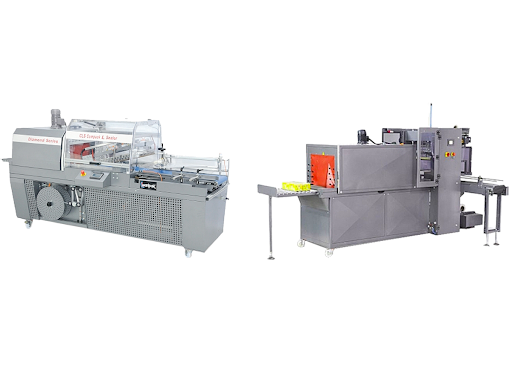
Shrink packaging is used across many industries because it can create a clean, protective covering around products while supporting efficient handling and distribution. At the center of this process is the shrinker machine, which works with shrink film, sealing equipment, conveyors, and controlled heat to create a finished package.
Although the process may look simple, consistent shrink wrapping depends on several variables working together. Film type, package dimensions, sealing quality, tunnel temperature, airflow, and conveyor speed can all affect the final result. Understanding these basics makes it easier to evaluate equipment and troubleshoot common packaging problems.
What Does a Shrinker Machine Do?
A shrinker machine uses controlled heat to make specially formulated shrink film contract around a product.
The product is first enclosed in film and usually sealed. It then passes through a heated chamber or tunnel where the film shrinks in response to temperature.
The result is a tighter package that conforms more closely to the product’s shape.
Shrink systems may be used for individual items, multipacks, boxes, trays, printed products, and many other applications. The exact equipment configuration depends on the product and required production rate.
The Process Starts Before Shrinking
The shrinking stage cannot compensate for poor preparation.
Before entering the heated section, the film must be positioned properly and sealed securely around the product. Weak or inconsistent seams may open when the film begins to contract.
For this reason, a shrinker machine is usually only one part of a complete packaging line.
A typical sequence may include:
- Product feeding
- Film wrapping
- Sealing
- Transfer to the shrink tunnel
- Controlled heat shrinking
- Cooling
- Inspection
- Downstream packing
Each stage affects what happens next.
Film Selection Changes the Entire Setup
Different shrink films have different operating requirements.
Polyolefin and polyethylene are commonly used in shrink packaging, but they can behave differently when exposed to heat. Film gauge and formulation can also affect sealing temperature, shrink force, and final appearance.
A shrinker machine therefore needs to be configured around the film actually being used.
Important variables may include:
- Tunnel temperature
- Conveyor speed
- Airflow
- Film thickness
- Product dimensions
- Seal temperature
Switching film without changing machine settings can lead to wrinkles, loose areas, weak seams, or excessive shrink.
Heat Must Be Controlled Carefully
More heat does not automatically create a better package.
If the temperature is too low, the film may remain loose. If the temperature is too high, the material can distort, develop holes, or place unnecessary stress on seals.
A properly configured shrinker machine should provide stable heat throughout the processing area.
Operators often need to test several combinations of temperature and conveyor speed to determine what works best for a particular product.
Once effective settings are found, documenting them can help improve repeatability during future production runs.
Airflow Is as Important as Temperature
Hot air needs to reach the package evenly.
If airflow is poor, one side of the product may shrink correctly while another remains wrinkled or loose. Corners, lower surfaces, and irregular shapes can be especially sensitive to uneven heat distribution.
A shrinker machine with controlled air circulation can help provide more consistent exposure around the package.
Product shape also affects airflow. A flat rectangular box interacts with heated air differently from a cylindrical item or bundled multipack.
This is why testing actual products is important when setting up a line.
Conveyor Speed Controls Dwell Time
Dwell time refers to how long a package remains in the heated area.
The conveyor has a major influence on this.
If products move too quickly through the shrinker machine, the film may not receive enough heat to shrink completely. If they move too slowly, they may be exposed to more heat than necessary.
Conveyor speed and tunnel temperature should therefore be adjusted together.
Changing one without considering the other can create inconsistent results.
The best operating point is usually the one that achieves reliable shrink quality while maintaining the required production speed.
Product Size Matters More Than Many Buyers Expect
A shrink system must be sized around the actual product range.
Important measurements include length, width, height, and orientation. Businesses should consider both the largest and smallest items they expect to process.
A shrinker machine that is too small may limit future production. One that is much larger than necessary can occupy more floor space and may require more energy to operate.
Package shape should also be considered.
Tall, irregular, or unstable products may need different infeed arrangements or conveyor support than standard cartons.
The Sealer and Shrinker Need to Be Balanced
Sealing speed and shrink capacity should work together.
If a sealer produces packages faster than the shrinker machine can process them, products may accumulate between stages. If the tunnel operates much faster than the sealer, some of its capacity remains unused.
The same principle applies to downstream conveyors and packing stations.
A packaging line should therefore be evaluated as a connected process rather than a collection of independent machines.
Balanced capacity can improve throughput more effectively than maximizing the speed of one component.
Changeovers Affect Real Productivity
Operations with many SKUs may need to change machine settings frequently.
A changeover can involve adjusting:
- Film width
- Product guides
- Tunnel temperature
- Conveyor speed
- Sealing dimensions
- Product spacing
Even a fast shrinker machine can produce poor overall productivity if every product change takes a long time.
Repeatable adjustment points and documented settings can reduce downtime.
For facilities handling many different products, changeover efficiency may be just as important as maximum operating speed.
Cooling Is Part of the Shrink Process
The package is still warm when it leaves the heated chamber.
Shrink film needs time to stabilize before the product is handled aggressively, stacked, or compressed.
If packages move immediately into a crowded downstream area, the film may become marked or distorted.
A complete shrinker machine setup should therefore include enough discharge space for cooling and inspection.
This becomes particularly important in high-speed lines where finished products quickly move toward labeling, case packing, or palletizing.
Maintenance Helps Keep Results Consistent
Packaging performance can change as equipment wears.
Components such as heaters, sensors, fans, belts, and sealing elements may require routine inspection. Film residue can also accumulate and interfere with operation.
Operators should pay attention to changes such as:
- Uneven shrinking
- Temperature instability
- Conveyor tracking problems
- Repeated film jams
- Unexpected noise
- Weak seals
Regular maintenance can help a shrinker machine remain predictable and reduce unexpected production interruptions.
Automation Should Match the Application
Not every operation needs a fully automated system.
Lower-volume businesses may benefit from manual or semi-automatic equipment, while larger facilities may need automated feeding, sealing, shrinking, and discharge.
The correct level of automation depends on production volume, labor requirements, product variation, and available floor space.
A shrinker machine delivers the greatest value when automation removes a real production constraint.
Adding unnecessary complexity can increase maintenance and training requirements without creating enough additional output to justify the investment.
How Can Packaging Waste Be Reduced?
Film waste can increase quickly over large production volumes.
Excess film around each product adds material cost and may make shrinking more difficult. Poor seals or incorrect settings can also create packages that need to be rewrapped.
Businesses can reduce waste by improving film sizing, product positioning, equipment settings, and operator consistency.
A well-adjusted shrinker machine should create the required package using only the amount of film needed for reliable sealing and shrinking.
Tracking waste by SKU can help identify where improvements will have the greatest impact.
Conclusion
A shrinker machine is an important part of shrink packaging, but reliable performance depends on much more than heat alone. Film selection, sealing quality, airflow, temperature, conveyor speed, product dimensions, cooling, and maintenance all contribute to the finished package. When reviewing systems from equipment suppliers such as Maripak USA, packaging teams should evaluate how the shrink process fits into the complete line, including product feeding, sealing, conveying, and downstream handling. The most effective setup is one that produces consistent packages at the required speed without creating unnecessary film waste, energy use, or production bottlenecks.
