Small shops and online sellers often reach a point where hand packing no longer keeps up. Orders grow, presentation matters, and protection during shipping becomes important. This guide explains how to choose and set up shrink wrap equipment without overspending or overbuilding.
Start With Your Products
List what you sell and how it is packed today. Note the largest and smallest items, their weight, and any odd shapes. Books, boxed games, candles, cosmetics, and apparel kits all behave differently under film.
Then estimate daily volume. A business wrapping fifty items a day needs very different shrink wrap equipment than one wrapping five thousand. Writing these numbers down prevents buying a machine that is too small or far too large.
Core Components for a Starter Setup
A Sealer
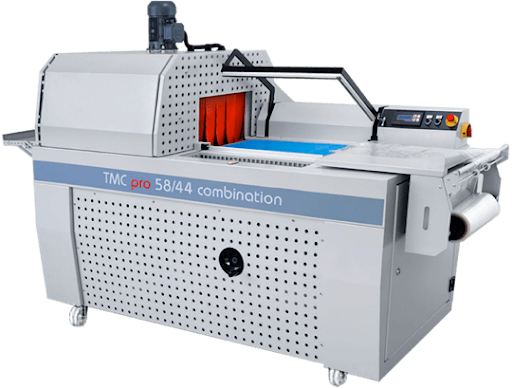
The sealer encloses the product in film and cuts it to length. Small operations often begin with a manual or semi-automatic unit, where an operator places the item and lowers a heated sealing bar. These models take little space and cost less than automated lines.
A Heat Chamber
After sealing, the package passes through a heated chamber where hot air tightens the film. Some compact units combine sealing and shrinking in one footprint, which suits crowded workshops. Separate tunnels offer more flexibility as volume grows.
Film
Film is the ongoing consumable. Polyolefin is popular for retail goods because of its clarity and strength. Polyvinyl chloride is cheaper but can become brittle and release fumes when heated, so ventilation matters.
Choosing the Right Automation Level
Manual
Manual equipment gives hands-on control and a low purchase price. Output depends on the operator’s speed, so it fits low volumes or varied items. It is a sensible start for testing the process.
Semi-Automatic
Semi-automatic models handle part of the cycle, such as film feeding or cutting. They increase speed and consistency without the cost of a full line. Many growing businesses settle here for several years.
Fully Automatic
Fully automated systems use conveyors and sensors to wrap items continuously. They suit higher volumes and reduce labour, though they require more space and investment. Choosing shrink wrap equipment at this level only makes sense when demand is steady.
Space and Utilities
Measure the available floor area and include room for loading, unloading, and film storage. Check power requirements, since some machines need dedicated circuits. Ventilation should be considered near the heat chamber.
Place equipment where products flow logically from packing to shipping. A tidy layout reduces handling and speeds the process. Good planning is as important as the machine itself when setting up shrink wrap equipment in a small facility.
Budget Considerations
Purchase price is only one cost. Add film, energy use, replacement parts such as sealing wire, and training time. A cheap unit that wastes film or breaks often can cost more than a sturdier one.
Ask about warranty coverage and technical support. Remote guidance for installation and troubleshooting can save time for small teams without dedicated technicians. Parts availability also matters, because waiting weeks for a component halts production.
Learning the Process
Practice with sample items before using real inventory. Start with moderate heat and speed, then adjust one variable at a time. Record settings that produce a smooth, tight finish.
Add small perforations so trapped air can escape, and space products evenly. Train every operator on the same method to keep results consistent.
Safety and Maintenance
Heated surfaces can burn, so keep guards in place and wear heat-resistant gloves. Clean sealing elements regularly, because residue weakens seals. Inspect belts, fans, and electrical connections on a schedule.
Keep a spare roll of film and a replacement sealing wire on hand. Consistent upkeep helps any shrink wrap equipment run reliably for years.
Choosing shrink wrap equipment with room to expand protects the budget.
Common Mistakes to Avoid
- Buying capacity far beyond current needs
- Ignoring ventilation requirements
- Choosing film without testing it
- Skipping operator training
- Forgetting the cost of consumables
Each of these is easy to avoid with some planning and a demonstration run.
Conclusion
A sensible setup matches products, volume, space, and budget, then grows as the business does. Once volumes rise and hand loading becomes the bottleneck, many owners move up to an automatic shrink wrap machine to keep pace without adding staff. Testing small and scaling steadily keeps risk low and quality high.
