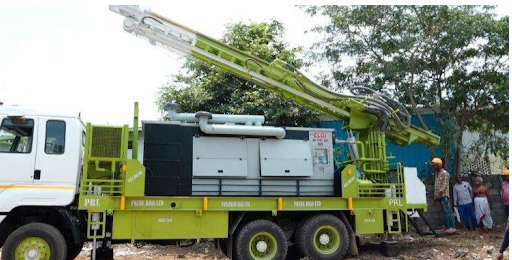
Reliable drilling equipment must balance mobility, drilling capacity, site accessibility, and operational control. For locations where conventional rigs may face transportation or access limitations, a portable borehole drilling machine can provide a practical approach to water well drilling. Its compact configuration allows equipment to be transported in sections and assembled closer to the working area, supporting projects in challenging locations.
The right equipment selection also depends on ground conditions, required depth, bore diameter, and the drilling method. Understanding these factors helps contractors choose machinery that can deliver consistent performance without creating unnecessary logistical complications.
Mobility and Site Accessibility
Portable equipment is particularly useful where roads, narrow passages, or difficult terrain restrict the movement of larger units. A sectional configuration can simplify transportation because major components can be carried separately and assembled at the drilling location.
This approach can support work in remote areas where bringing a conventional truck-mounted unit directly to the bore point may not be practical. Mobility therefore becomes an important consideration when planning groundwater development projects.
1. Sectional transportation
2. Compact site setup
3. Access to restricted locations
4. Easier equipment positioning
Selecting Equipment for Ground Conditions
Different formations require appropriate drilling approaches and equipment capabilities. Soil characteristics, rock hardness, expected overburden, hole diameter, and target depth should all be considered before selecting machinery for a project.
Equipment designed for specific applications can improve operational efficiency and reduce avoidable interruptions. Water well projects may require different configurations from mineral exploration or construction drilling, making application-based selection essential.
DTH Drilling
Down-the-hole drilling is suitable for formations where effective rock penetration is required. The hammer operates at the bottom of the borehole, helping deliver impact energy directly to the drilling area.
Rotary Drilling
Rotary systems use rotational force to advance drilling tools through the formation. They can be useful across suitable soil and rock conditions, depending on the selected equipment and tooling.
Combined Capabilities
Some rigs incorporate DTH and rotary drilling capabilities, giving operators greater flexibility when formation conditions change during a project. Such versatility can be valuable for varied drilling requirements.
Important Equipment Considerations
A practical equipment assessment should look beyond basic drilling capacity. The overall configuration, transport requirements, maintenance needs, and compatibility with supporting components can influence project productivity and operating costs.
Contractors can evaluate:
1. Required drilling diameter and depth
2. Formation and geological conditions
3. Transportation and site-access limitations
4. Available power and supporting equipment
5. Maintenance and operational requirements
These factors provide a stronger basis for selecting suitable machinery than relying on equipment size alone. Proper planning can also help align the drilling system with the project’s technical and logistical demands.
Supporting Productivity Through Proper Configuration
A well-matched drilling setup can help maintain consistent progress across different stages of a project. Supporting components such as drill pipes, bits, DTH hammers, and mud pumps must be compatible with the selected drilling arrangement and application.
Maintenance also plays an important role in sustained performance. Regular inspection of critical components, appropriate servicing, and timely replacement of worn tooling can help minimize unexpected interruptions during drilling operations.
Final Thoughts
What makes the right equipment valuable is its ability to match practical site demands with dependable drilling performance. Prime Rigs offers portable and specialized drilling solutions, including the PDTH-50 Inwell and PWD-30 Wagon, alongside water well, mining, construction, and core drilling equipment. For contractors evaluating a drilling rig machine, reviewing application requirements, terrain, formation, capacity, and transportation needs can help identify a suitable configuration for the intended project.
