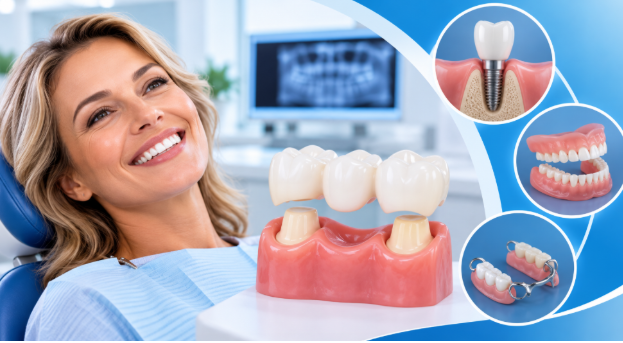
Missing teeth can affect much more than your smile. They may make chewing difficult, alter speech, and even lead to changes in the alignment of surrounding teeth over time. Fortunately, modern restorative dentistry offers several solutions to replace missing teeth, with one of the most popular being a porcelain teeth bridge. Designed to restore both function and appearance, porcelain bridges offer a natural-looking solution for individuals who want fixed tooth replacement without removable appliances.
Choosing the right treatment depends on several factors, including oral health, the number of missing teeth, and personal preferences. Understanding how a porcelain teeth bridge compares with other tooth replacement options can help you make a more informed decision alongside your dental professional. A dental bridge replaces one or more missing teeth by anchoring an artificial tooth (pontic) to supporting teeth or implants on either side of the gap.
What Is a Porcelain Teeth Bridge?
A porcelain teeth bridge is a fixed dental restoration used to replace one or more missing teeth. It consists of one or more artificial teeth, known as pontics, supported by crowns placed on adjacent natural teeth or dental implants.
Porcelain is widely used because it closely resembles the appearance of natural teeth while providing durability for everyday function. Depending on the patient’s needs, bridges may also combine porcelain with other materials to improve strength.
Benefits of a Porcelain Teeth Bridge
A porcelain teeth bridge offers several advantages for patients seeking a fixed tooth replacement option.
Some of the key benefits include:
1. Natural-looking appearance
2. Restored chewing ability
3. Improved speech
4. Prevention of neighboring teeth shifting
5. Enhanced smile aesthetics
6. Fixed, non-removable restoration
These benefits make porcelain bridges a popular option for replacing missing teeth in many clinical situations.
How It Compares with Dental Implants
Dental implants and bridges both restore missing teeth, but they differ in several ways.
Porcelain Teeth Bridge
1. Does not require implant surgery
2. Treatment is often completed more quickly
3. Uses adjacent teeth for support
4. Suitable when neighboring teeth already need crowns
Dental Implants
1. Replace both the tooth and root
2. Do not rely on adjacent teeth
3. Help preserve jawbone
4. Usually involve a longer treatment timeline
The most appropriate option depends on the patient’s oral health, bone structure, and treatment goals.
Porcelain Bridge vs. Removable Dentures
Many patients also compare a porcelain teeth bridge with removable partial dentures.
A fixed bridge generally offers:
1. Greater stability
2. Improved comfort
3. Better chewing efficiency
4. A more natural feel
5. No daily removal for cleaning
Removable dentures may be appropriate for certain situations, particularly when multiple teeth are missing or when other treatment options are not suitable.
Who Is a Good Candidate?
A porcelain teeth bridge may be suitable for individuals who:
1. Have one or more missing teeth
2. Have healthy adjacent teeth or implants
3. Maintain good oral hygiene
4. Have healthy gums
5. Are looking for a fixed restoration
A comprehensive dental examination helps determine whether a bridge is the most appropriate treatment option.
The Treatment Process
Receiving a porcelain bridge generally involves several steps.
The process typically includes:
1. Dental examination
2. Tooth preparation
3. Dental impressions or digital scanning
4. Temporary bridge placement
5. Fabrication of the permanent restoration
6. Final bridge placement and adjustment
Treatment usually requires multiple appointments over two to four weeks, depending on the complexity of the case and the type of bridge being placed.
Caring for Your Bridge
Proper maintenance helps maximize the lifespan of a porcelain teeth bridge.
Daily care should include:
1. Brushing twice daily
2. Flossing beneath the bridge using floss threaders or interdental cleaners
3. Using fluoride toothpaste
4. Attending regular dental check-ups
5. Avoiding excessively hard foods that could damage the restoration
With proper oral hygiene and regular professional care, many dental bridges remain functional for five to fifteen years or longer.
Factors to Consider Before Choosing a Bridge
Every patient’s dental needs are unique.
Before selecting a treatment, your dentist may evaluate:
1. Number of missing teeth
2. Health of neighboring teeth
3. Gum health
4. Jawbone condition
5. Bite alignment
6. Long-term oral health goals
These factors help determine whether a bridge, implant, or another restorative treatment offers the most suitable outcome.
Why Early Tooth Replacement Matters
Replacing missing teeth promptly can help reduce the risk of future oral health complications.
Timely treatment may help:
1. Maintain proper bite alignment
2. Prevent neighboring teeth from drifting
3. Improve chewing efficiency
4. Restore clear speech
5. Support facial appearance
Delaying treatment may increase the complexity of future restorative procedures as surrounding teeth and supporting structures change over time.
Conclusion
A porcelain teeth bridge remains one of the most effective solutions for replacing missing teeth while restoring function and aesthetics. Its natural appearance, fixed design, and ability to improve chewing and speech make it an excellent option for many patients. However, choosing the right tooth replacement depends on individual oral health needs, lifestyle, and long-term treatment goals. If you are considering a dental bridge, a comprehensive dental evaluation can help determine whether this treatment is the right choice for your long-term oral health. Consulting a qualified dental professional is the best way to determine the most appropriate restorative solution for your smile.
