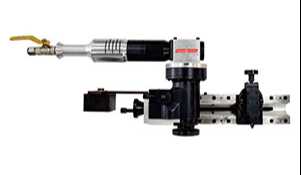
The choice of suitable bevelling tools plays a critical role in the preparation of pipes for welding or fabricating. Not all pipe materials behave the same way in terms of cutting and machining. Hence, what works on carbon steel will not produce similar results when applied to stainless steel.
Selecting the correct type of bevel will depend on certain elements like the composition of the pipe, wall thickness, diameter, desired bevel angle, working room available, and even the surface finish that is wanted. Knowing this information will assist in getting good pipe preparation.
Why Does Pipe Material Matter When Choosing a Bevelling Tool?
Various pipe materials have different hardness, strength, thermal, and machining properties. All these factors determine how easy it is for the tool to cut through the material and create a good bevel. For instance, carbon steel is relatively easy to machine as compared to stainless steels and other high-alloyed materials. This is because of differences in their hardness and strength. Before selecting a tool, teams should consider:
1. Pipe material and grade
2. Pipe diameter and wall thickness
3. Required bevel angle and profile
4. Available power source
5. Access around the pipe
6. Required machining speed
7. Surface-finish requirements
8. Volume of pipe preparation required
Which Bevelling Tools Are Suitable For Carbon Steel Pipes?
Carbon steel is widely used in industrial piping, construction, power generation, and process plants. Its relatively good machinability means several types of bevelling tools can be used depending on the pipe dimensions and application.
In case of ordinary applications and production, portable pipe bevellers can be used to achieve good bevels with reduced manual grinding. In other cases, where there is a large-diameter pipe or a need for repair in on-site conditions, an in situ approach might be better, as machining can be done without moving the pipe to a workshop. The chosen beveller must have adequate capability for the pipe diameter and wall thickness to produce an appropriate bevel.
Should You Consider Portable Or In-Situ Bevelling Tools?
The workplace can play an equal part in deciding whether one goes for this option or not. Workshop machining may prove to be appropriate when pipes can be detached and moved without any difficulty. This is not always easy in places like operational plants, refineries, or power stations.
Portable bevelling tools allow pipe preparation closer to the installation or repair location, reducing handling requirements and disruption to surrounding equipment. For maintenance teams planning to buy in-situ machining tools, factors such as pipe size, material compatibility, cutting capacity, portability, and available workspace should be evaluated before selecting equipment.
Wrapping Up!
Selection of proper bevelling tools begins with knowledge of the pipe material and is further followed by an analysis of diameter, wall thickness, bevel requirements, and other parameters. Carbon steel pipes, stainless steel pipes, and alloy pipes might require a different approach towards the selection of the bevelling tools.
The appropriate tool will enable the creation of consistent bevels, provide efficient preparation for the welding process, and avoid extra work. The PowerMaster provides industrial solutions for maintenance and field work. It enables selection of tools according to pipe preparation requirements. Evaluation of the whole application prior to the purchase and use of the equipment is recommended.
