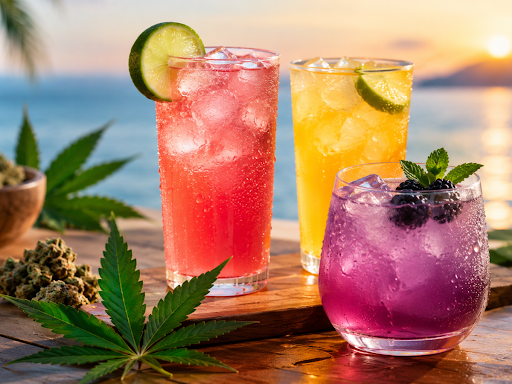
The beverage industry is expanding into products that combine familiar flavors with cannabinoids, giving adults new formats to explore. High Tide beverages are part of this emerging category, offering ready-to-drink options made with hemp-derived THC. Understanding how these products work, what labels mean, and what regulations apply can help consumers make informed decisions before purchasing.
What Are THC-Infused Beverages?
THC-infused beverages are drinks containing tetrahydrocannabinol, the cannabinoid responsible for the intoxicating effects associated with cannabis. Unlike smoking or vaping, beverages deliver THC through the digestive system. Potency, serving size, ingredients, and cannabinoid type should always be checked before consumption.
High Tide Beverages describes its drinks as hemp-derived THC beverages made with nano-emulsion technology. According to the company, this water-soluble approach is intended to support faster absorption than traditional edible formats. Its range includes Strawberry Watermelon, Black Cherry Apple, Fruit Punch, Margarita, Grape, and Blue Raspberry. The company also states that its products are third-party lab-tested.
Why Nano-Emulsion Technology Matters
Traditional edible products must pass through the digestive process before their active compounds become available to the body. Nano-emulsion technology uses very small droplets to disperse an oil-based cannabinoid in a water-compatible formulation. Individual experiences can still vary.
For consumers researching High Tide beverages, this technology is relevant because onset time can affect how a person approaches serving size. It should still be treated as a THC product rather than an ordinary refreshment.
What Should Consumers Check?
Reading the product label is one of the most important steps before purchasing a cannabinoid beverage. Consumers should look for the amount of THC per serving, the number of servings in the container, ingredients, storage instructions, and applicable age restrictions.
Laboratory testing is another useful quality indicator. A certificate of analysis, or COA, can provide information about cannabinoid potency and testing for certain contaminants. High Tide states that its batches undergo third-party laboratory testing for purity, potency, and safety.
Consumers should also avoid assuming that hemp-derived automatically means federally approved as a food ingredient. The legal position is more complicated than product terminology may suggest.
Understanding U.S. Regulations
Federal and state rules are particularly important when purchasing THC beverages. The U.S. Food and Drug Administration states that, under the Federal Food, Drug, and Cosmetic Act, it is prohibited to introduce into interstate commerce food to which THC or CBD has been added, subject to statutory exceptions. The FDA’s position applies even when the cannabinoid is hemp-derived.
State laws can also create rules concerning hemp products, THC limits, testing, labeling, age requirements, and sales. Therefore, availability through an online storefront does not by itself establish that a product may legally be shipped to every location.
High Tide identifies itself as an Oklahoma-based company and states that it ships nationwide, while restricting its products to adults aged 21 and over. Consumers should confirm destination rules before ordering.
Responsible Use and Storage
THC beverages should be approached differently from ordinary soft drinks. Consumers should follow labeled serving guidance, avoid activities requiring full attention, and never drive or operate heavy machinery after consuming an intoxicating product. High Tide specifically includes a warning against driving or operating heavy machinery.
Products should also be stored securely and kept away from children and pets. Because beverages can resemble conventional drinks, appropriate storage is especially important in households where someone could mistake them for non-intoxicating products.
Conclusion
The rise of High Tide beverages reflects a broader shift toward convenient, ready-to-drink cannabinoid formats. Their appeal comes from familiar beverage flavors, measured servings, and technologies designed to change how cannabinoids are absorbed. However, consumers should look beyond taste and packaging when evaluating these products.
For people researching THC drink delivery, checking destination-specific laws, product labeling, testing information, and age requirements is essential before placing an order. Responsible use also means understanding potency and allowing sufficient time to assess effects rather than immediately consuming another serving. As the cannabinoid beverage market continues developing, informed purchasing remains important. Consumers who understand both product characteristics and the regulatory environment can approach this category carefully and make decisions based on verified information rather than assumptions.
