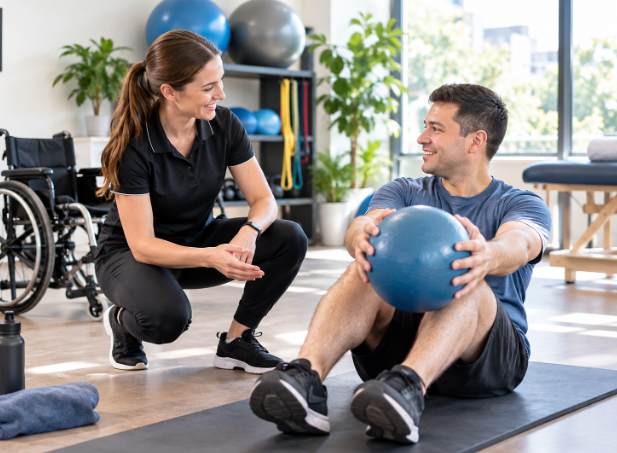
Finding appropriate exercise-based support can be an important consideration for people living with disability. An exercise physiologist can develop structured programs around a person’s functional capacity, health conditions, goals, and daily activities. For NDIS participants, exercise physiology may form part of therapy supports when it meets the relevant funding requirements.
The NDIS identifies exercise physiology as one type of therapy support that may be funded where the support meets the applicable NDIS funding criteria and is connected to functional outcomes related to a participant’s disability.
For people looking for an exercise physiologist NDIS in Leichhardt, understanding what exercise physiology involves, how NDIS funding works, and what to consider when selecting a provider can make the process easier to navigate.
What Does an Exercise Physiologist Do?
An exercise physiologist is an allied health professional who uses structured exercise interventions to support health, function, rehabilitation, and physical capacity.
Exercise physiology differs from general personal training because programs can be developed around medical conditions, disabilities, functional limitations, rehabilitation requirements, and clinically relevant goals.
An exercise physiologist may assess factors such as:
1. Strength and muscular endurance
2. Balance and coordination
3. Mobility and movement
4. Cardiovascular fitness
5. Physical capacity
6. Functional limitations
7. Exercise tolerance
8. Individual goals
9. Existing health conditions
The assessment can then inform an exercise program that is adjusted according to the person’s abilities and progress.
How NDIS Exercise Physiology Can Support Participants
The NDIS includes exercise physiology among the therapy supports it may fund. According to the NDIS, therapy supports must satisfy the relevant funding criteria, and providers delivering therapy supports must be appropriately qualified and registered or accredited according to their profession.
For an exercise physiologist NDIS in Leichhardt, the focus may be on helping a participant work toward functional and personal goals rather than simply improving general fitness.
Depending on the individual’s circumstances, exercise-based interventions may address areas such as:
1. Strength and physical capacity
2. Mobility
3. Balance
4. Coordination
5. Physical independence
6. Community participation
7. Confidence with movement
8. Development of self-management skills
The specific goals should be determined through an individual assessment and considered alongside the participant’s NDIS plan and funding arrangements.
Individualised Exercise Programs
People with disabilities can have very different physical abilities and support requirements. An exercise program therefore needs to account for the individual’s circumstances rather than relying on a standard routine.
A tailored program may consider:
1. The participant’s disability or health condition
2. Current level of physical activity
3. Previous exercise experience
4. Pain or movement limitations
5. Available equipment
6. Home environment
7. Community access
8. Personal interests
9. Short- and long-term goals
The Movement Exercise Physiology states that its NDIS services involve individually tailored exercise programs and can be delivered in settings including clinics, homes, community environments, and outdoor locations. These are provider-specific service descriptions and availability may vary.
Building Functional Capacity
One of the important considerations when using exercise physiology through the NDIS is the connection between intervention and functional outcomes.
Exercise may be used to help someone develop physical skills that have practical relevance to everyday life. For example, improving lower-body strength could support transfers or movement, while balance-focused exercises could help someone work toward greater confidence with everyday activities.
The precise goals depend on the participant. An exercise physiologist can establish baseline capabilities and use progress assessments to determine whether the program remains appropriate.
The NDIS states that therapy supports must have sufficient evidence of beneficial functional outcomes for a participant’s disability to meet its funding criteria.
Exercise Physiology and Community Participation
Physical capacity can influence a person’s ability to participate in community activities.
For some participants, an exercise program may incorporate goals related to walking, endurance, balance, strength, or confidence in community environments. These objectives can be particularly relevant when physical limitations make everyday participation more difficult.
The Movement’s NDIS service information describes community engagement as one component of its approach, including support for participation in community-based exercise, sport, and recreational activities.
The exact activities should always be based on individual goals, safety considerations, and functional needs.
Where Exercise Physiology Sessions Can Take Place
The location of exercise physiology can affect accessibility and consistency.
Depending on the provider and participant’s circumstances, sessions may occur in:
1. A clinical setting
2. A participant’s home
3. A community environment
4. An outdoor location
5. Another appropriate exercise setting
Home-based sessions can be particularly useful for people who experience transport or mobility barriers. The Movement states that home visits are available for eligible participants subject to availability.
Before starting, participants should confirm where sessions are available and whether travel or other associated costs are handled under the applicable NDIS arrangements.
Choosing an Exercise Physiologist in Leichhardt
When comparing providers, participants and their support networks can consider several practical factors.
Relevant Qualifications
Ask about the professional’s qualifications and accreditation. The NDIS requires therapy supports to be delivered by appropriately qualified and registered or accredited allied health professionals.
Experience With Disability
Experience working with people with disabilities can be relevant, particularly when a participant has complex physical, neurological, intellectual, or developmental needs.
Individualised Planning
A suitable program should reflect the participant’s goals and abilities rather than applying the same exercises to every person.
Accessibility
Consider whether the provider offers an accessible location or home and community-based sessions where appropriate.
Communication
A collaborative approach can help participants understand the purpose of exercises, monitor progress, and communicate changes in their needs.
What to Discuss During the Initial Assessment
An initial consultation is an opportunity to explain the participant’s goals and provide relevant background information.
Useful information may include:
1. Current NDIS plan details
2. Disability-related considerations
3. Relevant medical history
4. Current medications where clinically relevant
5. Previous injuries
6. Current exercise levels
7. Mobility limitations
8. Equipment requirements
9. Personal goals
10. Preferred activities
11. Communication or accessibility needs
The exercise physiologist may use this information alongside physical assessments to establish an appropriate starting point.
Exercise Physiology and Other Allied Health Services
Exercise physiology may form part of a broader support network.
Depending on a participant’s needs, exercise physiology can potentially complement services such as physiotherapy, occupational therapy, dietetics, psychology, or other allied health supports.
Each profession has a different scope and purpose. Coordination between professionals can help ensure that interventions are consistent with the participant’s overall goals.
The NDIS lists exercise physiology alongside several other therapy supports, including physiotherapy, occupational therapy, dietetics, psychology, and speech pathology.
Understanding NDIS Funding
NDIS funding arrangements should be checked before commencing services.
The NDIS support catalogue provides information about available support items, support categories, claim types, and applicable maximum prices. The 2026–27 catalogue is the current catalogue identified by the NDIS.
Importantly, not every exercise or fitness service is automatically an NDIS-funded therapy support. The NDIS specifically states that general gym memberships and personal training are among the supports it does not fund as therapy supports.
Participants should therefore discuss their specific plan and funding arrangements with their plan manager, support coordinator, or relevant NDIS contact where necessary.
Exercise Physiology for Different Conditions
Exercise physiology can be relevant to people with a broad range of disabilities and health conditions, but the appropriate intervention depends on the individual’s clinical circumstances.
The Movement’s published NDIS information describes work with people experiencing conditions including autism, spinal cord injuries, genetic and neurological conditions, intellectual disabilities, and physical disabilities.
A qualified exercise physiologist can determine whether particular exercises are appropriate after considering the participant’s condition, physical capacity, goals, and relevant precautions.
DVA and NDIS Are Different Funding Pathways
It is important not to assume that NDIS and Department of Veterans’ Affairs arrangements operate in the same way.
The DVA provides exercise physiology services to eligible Veteran Card holders where there is an assessed clinical need. DVA states that exercise physiology services must be provided by an exercise physiologist accredited by Exercise & Sports Science Australia and registered with Services Australia.
DVA exercise physiology can be used for clinically necessary treatment under the applicable Veteran Card arrangements, including management of chronic disease or rehabilitation following major injury or illness. Eligible clients generally require an appropriate referral under DVA’s treatment-cycle arrangements.
This is separate from NDIS funding, so participants should confirm which funding pathway applies to their circumstances.
Questions to Ask Before Starting
Before choosing an exercise physiology provider, it can help to ask:
1. Are the exercise physiologists appropriately qualified and accredited?
2. Does the provider have experience with the participant’s disability or condition?
3. Where can sessions take place?
4. Can the program be adapted as needs change?
5. What information is needed for the initial assessment?
6. How will progress be monitored?
7. How does the provider handle communication with families or support workers?
8. What NDIS funding arrangements apply?
9. Are there any additional costs?
10. How does the service fit with other allied health supports?
Having clear answers to these questions can make it easier to determine whether a provider is appropriate for the participant’s circumstances.
Conclusion
An exercise physiologist NDIS in Leichhardt can provide structured, individualised exercise support focused on functional capacity, physical health, independence, and participant-defined goals. Because NDIS therapy funding is subject to specific criteria, it is important to distinguish clinically relevant exercise physiology from general fitness services and to confirm that the proposed support aligns with the participant’s plan and funding arrangements. For people also researching DVA exercise physiology, it is important to remember that DVA has separate eligibility, referral, provider, and treatment requirements. DVA currently states that eligible Veteran Card holders may access clinically necessary exercise physiology through its allied health arrangements, subject to the relevant conditions and referrals. Ultimately, the right exercise program should be based on the participant’s abilities, health circumstances, accessibility requirements, and personal goals. A thorough assessment with an appropriately qualified professional is a useful starting point for developing a safe and relevant exercise plan.
