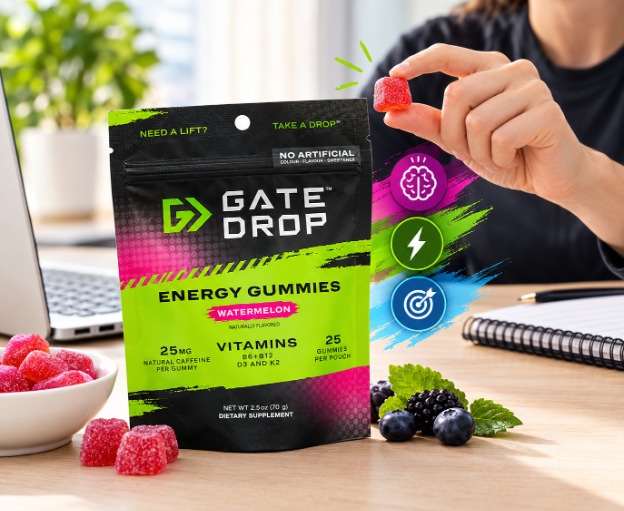
Mental fatigue can make it harder to concentrate, react quickly, or stay productive during long workdays, study sessions, travel, and demanding physical activity. Many people respond by reaching for coffee or other caffeinated products, while others consider an energy and focus supplement designed to support both alertness and concentration. These products may contain caffeine, vitamins, amino acids, botanical ingredients, or combinations intended to influence physical energy and cognitive performance.
The important question is not simply whether these supplements provide stimulation, but how their ingredients work and whether research supports their intended effects. Understanding the science behind common ingredients can help consumers make better decisions and avoid expecting more from a supplement than it can realistically provide.
What Does an Energy and Focus Supplement Actually Do?
An energy and focus supplement is generally formulated to support two related functions: reducing feelings of tiredness and helping a person remain mentally attentive.
The exact mechanism depends on the ingredients. Caffeine is one of the most common because it affects adenosine receptors in the brain. Adenosine gradually builds during waking hours and contributes to feelings of sleepiness. Caffeine temporarily blocks its action, which can increase wakefulness and reduce perceived fatigue.
A major scientific review found that low-to-moderate caffeine intake can improve alertness, vigilance, attention, and reaction time, although effects on memory and complex decision-making are less consistent.
This distinction matters because feeling more awake does not necessarily mean every aspect of cognitive performance improves equally.
Can Caffeine Really Improve Focus?
Caffeine is among the best-researched substances used for short-term mental performance.
A 2025 systematic review and meta-analysis involving 31 trials and 1,455 participants found that caffeine produced measurable improvements in both attention accuracy and reaction time in healthy adults. The analysis also suggested that higher doses did not produce unlimited improvements; accuracy appeared to improve only up to a certain point.
This is important when evaluating an energy and focus supplement. More caffeine is not automatically better.
Some people may experience benefits from moderate amounts, while excessive intake may lead to nervousness, restlessness, headaches, digestive discomfort, or difficulty sleeping. Individual response can vary according to body size, caffeine tolerance, genetics, sleep habits, and other dietary sources of caffeine.
What Ingredients Are Commonly Used for Energy and Focus?
Different formulations use different combinations of ingredients. Some of the most common categories include caffeine, B vitamins, amino acids, carbohydrates, and plant-based compounds.
Caffeine
Caffeine can support temporary alertness and attention. Research has also shown that it may improve reaction time and vigilance, making it useful during periods when sustained attention is required.
B Vitamins
B vitamins are involved in normal energy metabolism. Nutrients such as vitamin B6 and vitamin B12 help the body perform metabolic processes necessary for normal cellular function.
However, consuming extra B vitamins does not necessarily provide an immediate energy boost in people who already obtain sufficient amounts through their diet.
Amino Acids
Some supplements contain amino acids or related compounds marketed for mental or physical performance. Their effectiveness depends on the specific ingredient, dosage, and context in which they are used.
Botanical Ingredients
Plant-derived compounds may also appear in focus-supporting products. Evidence varies widely, so consumers should look at research involving the specific ingredient rather than assuming that every botanical substance improves concentration.
When Might an Energy and Focus Supplement Be Useful?
People may consider an energy and focus supplement during periods that require sustained mental or physical attention.
Examples may include:
1. Long work sessions
2.Studying or exam preparation
3. Early-morning activities
4. Exercise and training
5. Long-distance travel
6. Tasks requiring sustained vigilance
However, these products should not be expected to replace adequate rest.
Research on caffeine suggests that it can improve attention and performance even during demanding situations, but cognitive outcomes differ according to the task. A scientific review found stronger evidence for improvements in alertness and attention than for improvements in learning, memory, and higher-level judgment.
Therefore, someone may feel more awake without necessarily becoming better at every type of mental task.
How Does Sleep Affect Focus and Energy?
Supplements are often used to address tiredness, but inadequate sleep may be the underlying problem.
Sleep supports memory, reaction time, decision-making, mood regulation, and physical recovery. Using caffeine regularly to compensate for insufficient sleep can become counterproductive if caffeine is consumed too late in the day and interferes with nighttime rest.
A better approach is to consider the wider reasons for low energy.
These may include:
1. Inadequate sleep
2. Poor hydration
3. Irregular meals
4. Low calorie intake
5. Excessive stress
6. Insufficient recovery after exercise
7. Prolonged sedentary periods
An energy and focus supplement may temporarily change how tired a person feels, but it cannot correct every underlying cause of fatigue.
What Should You Check Before Taking a Focus Supplement?
The ingredient label should be the starting point.
Consumers should first determine whether the product contains caffeine and how much is included per serving. The amount should then be considered alongside caffeine consumed through coffee, tea, soft drinks, chocolate, and other supplements.
It is also useful to review:
1. Recommended serving size
2. Caffeine per serving
3. Added sugar
4. Other stimulants
5. Vitamin quantities
6. Proprietary blends
7. Instructions regarding timing
People who are particularly sensitive to caffeine may need smaller amounts than frequent caffeine users.
Another important consideration is timing. Taking stimulant-containing products late in the afternoon or evening may affect sleep, which can ultimately worsen next-day tiredness and concentration.
Is More Stimulation Better for Mental Performance?
Not necessarily.
An energy and focus supplement should ideally provide enough stimulation to support alertness without producing unwanted effects that interfere with concentration.
The latest meta-analysis of caffeine and attention found that while greater caffeine exposure could continue to improve reaction speed, attention accuracy did not continue improving indefinitely. At higher levels, the relationship became less straightforward.
This reinforces an important principle: the goal should be appropriate intake rather than maximum stimulation.
A person who becomes jittery, anxious, or restless from a high caffeine dose may actually find it more difficult to concentrate despite feeling highly awake.
Conclusion
Products designed for mental and physical alertness can be helpful in specific circumstances, particularly when their active ingredients and dosages are supported by research. A well-selected energy and focus supplement may temporarily support attention, vigilance, and wakefulness, but its effectiveness depends on individual tolerance, timing, and the ingredients used. Portable options such as gummies for energy may appeal to people who prefer a measured and convenient format, although their caffeine and ingredient content should still be evaluated just as carefully as drinks, capsules, or powders. Ultimately, sustained energy and concentration depend on more than supplementation. Regular sleep, balanced meals, adequate hydration, physical activity, and appropriate recovery remain the foundation of consistent mental performance.
