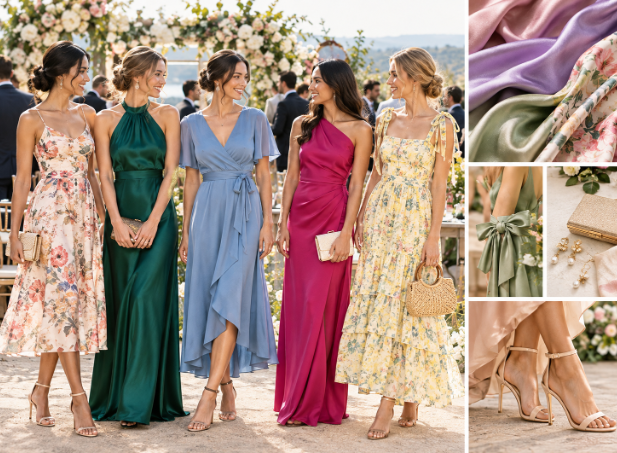
Choosing an outfit for a wedding involves balancing the event’s dress code, venue, season, and personal style. The right dresses for wedding guest occasions can range from lightweight floral midis for daytime celebrations to floor-length gowns for formal evening receptions. Current wedding-fashion guidance emphasizes matching the level of formality to the invitation while considering practical factors such as fabric, movement, and weather.
A useful starting point is the invitation. Words such as black tie, formal, cocktail, semi-formal, garden party, or casual provide clues about length, fabric, and styling. The venue and time of day can provide additional context when the dress code is less specific.
How to Choose a Wedding Guest Dress
The best dresses for wedding guest events begin with the formality of the occasion rather than a particular trend. A formal evening wedding generally calls for a more polished silhouette, while a daytime garden celebration may allow lighter fabrics, brighter colors, and more relaxed shapes.
For semi-formal events, midi and knee-length dresses are common options, while formal or black-tie celebrations can call for longer silhouettes. Vogue’s current guidance also notes that semi-formal dressing sits between casual and formal attire, with the venue and time of day helping determine how dressed-up the outfit should be.
When the invitation provides little information, the venue can help fill the gap. A ballroom reception, outdoor garden ceremony, restaurant celebration, and destination wedding can each create different practical requirements.
Popular Silhouettes for Wedding Guests
The silhouette determines the overall shape of a dress and can significantly change its visual character. Several styles work particularly well for wedding occasions.
Midi Dresses
Midi dresses typically fall below the knee and above the ankle. They provide a versatile middle ground between short and full-length designs. Depending on the fabric and construction, a midi can work for daytime ceremonies, cocktail receptions, and semi-formal celebrations.
Maxi Dresses
Maxi dresses extend toward the ankle or floor and are suitable for more formal settings. Flowing skirts can create an elegant appearance, while fitted or column silhouettes provide a more structured effect.
A-Line Dresses
An A-line silhouette gradually widens from the waist toward the hem. Its balanced proportions make it adaptable to different fabrics, necklines, sleeve lengths, and wedding settings.
Wrap Dresses
Wrap designs use overlapping fabric at the front of the bodice and can create a defined waistline. They are available in both casual and formal materials, making the basic silhouette adaptable to different dress codes.
Column and Sheath Dresses
Column and sheath styles follow a relatively straight or streamlined outline. They can work particularly well for evening receptions when paired with refined fabrics and restrained accessories.
Current occasionwear collections also show a wide range of midi, maxi, pleated, halter, tiered, column, and draped silhouettes, demonstrating how many different shapes can work within wedding guest dressing.
Choosing Fabrics for the Season
Fabric affects both appearance and practicality. Lightweight materials such as chiffon, georgette, cotton blends, and certain jerseys can be useful for warm-weather events because they tend to allow easier movement. Satin, velvet, jacquard, and heavier textured materials can create a more substantial appearance for evening or cooler-season occasions.
For summer weddings, breathable materials and looser silhouettes can make a significant difference, particularly when ceremonies or receptions take place outdoors. Current wedding-dress guidance recommends breathable fabrics and silhouettes that allow movement for hot and humid conditions.
For cooler weather, velvet, heavier satin, jacquard, and layered styling can provide additional structure and warmth. Fabric should therefore be considered alongside the season rather than selected solely for appearance.
Colors and Prints for Wedding Celebrations
Color is another important consideration. Floral prints, jewel tones, pastels, saturated shades, and restrained neutrals can all work depending on the season and formality.
Daytime weddings often provide more room for lighter or brighter colors and expressive prints. Evening events can accommodate deeper tones and richer fabrics. Recent fashion coverage also highlights vivid colors, expressive prints, draped silhouettes, and romantic details within contemporary wedding guest dressing.
White, ivory, and closely related bridal shades require particular consideration because they can resemble traditional bridalwear. The invitation, cultural setting, and couple’s preferences should always take priority when determining appropriate colors.
Print scale can also affect the overall appearance. Small floral patterns create a different effect from large botanical prints, while geometric or abstract designs can give a dress a more contemporary appearance.
Matching the Dress to the Venue
The venue can help determine the most practical dress length, fabric, and footwear.
For a garden wedding, a midi or flowing maxi can work well with practical footwear suited to grass or uneven surfaces. A formal ballroom reception may support a floor-length gown or structured midi. Beach and destination weddings generally benefit from lighter fabrics and silhouettes that move easily.
Outdoor conditions should also influence accessory choices. Long hems may need additional consideration on grass or uneven ground, while delicate fabrics may require more care in windy or wet conditions.
The time of day matters as well. Daytime events generally lend themselves to lighter visual treatments, while evening celebrations can accommodate more dramatic silhouettes, textured fabrics, embellishment, or subtle shine.
Necklines, Sleeves and Details
Neckline and sleeve design can change the character of an otherwise simple dress. Common options include V-necks, square necklines, halter styles, one-shoulder designs, high necklines, and boat necks.
Sleeves range from sleeveless and cap sleeves to short, three-quarter, and full-length designs. For formal events, structured sleeves or refined draping can add interest without relying heavily on embellishment.
Details such as pleating, lace, embroidery, ruching, ruffles, bows, and subtle beading can also provide visual texture. The current 2026 occasionwear landscape includes elements such as lace, satin, fringe, structured silhouettes, and geometric embellishment.
A useful approach is to choose one dominant feature. For example, a dress with dramatic sleeves may not need an equally elaborate neckline and heavily embellished accessories.
Accessories That Complement the Dress
Accessories should support the dress rather than compete with it. Shoes, a clutch or small handbag, jewelry, and outer layers can all be selected according to the formality of the event.
A simple dress can accommodate a more noticeable necklace or earrings, while an embellished dress may work better with restrained jewelry. Footwear should also reflect the venue. Block heels or dressy flats can be practical for outdoor locations, while formal heels may be appropriate for indoor evening receptions.
A lightweight wrap, shawl, or tailored jacket can provide an additional layer when temperatures change between the ceremony and reception.
Creating a Rewearable Wedding Guest Wardrobe
One advantage of selecting versatile dresses for wedding guest occasions is the possibility of wearing the same garment to different events with different styling.
A simple midi can change character through accessories, footwear, and outerwear. A floral maxi can work for a daytime wedding with understated accessories and later be styled differently for another occasion. Neutral colors and classic silhouettes can also remain useful beyond a single wedding season.
Current fashion guidance increasingly emphasizes reusable silhouettes, quality fabrics, and clean proportions rather than choosing an outfit that is tied exclusively to one trend.
Conclusion
The most useful dresses for wedding guest events are those that fit the invitation, venue, season, and level of formality while allowing comfortable movement. Midi, maxi, A-line, wrap, column, and other silhouettes offer different approaches, while fabrics such as chiffon, georgette, satin, lace, and jacquard can change the character of the same basic shape. When building a broader occasion wardrobe, party dresses for women can also overlap with wedding guest styles when their color, length, fabric, and level of embellishment suit the specific celebration. Considering these elements together makes it easier to create an outfit that feels appropriate without relying entirely on short-lived trends.
