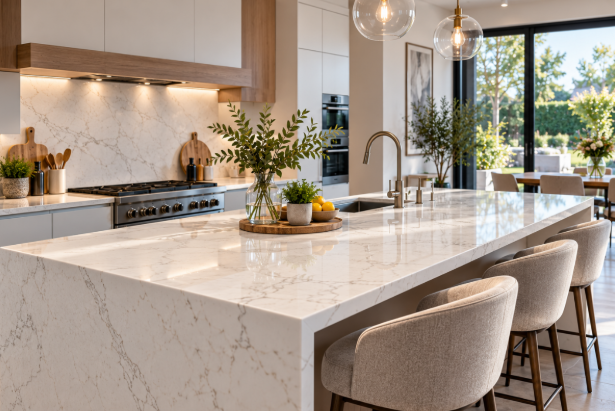
The surface that sits beneath chopping boards, hot pans, and spilled coffee takes more punishment than almost any other part of a home. Choosing it well affects how a kitchen looks, how easily it is cleaned, and how long it stays in good condition. Many homeowners now shortlist countertops for kitchens of quartz composition because the material combines strength, consistent colour, and low upkeep in a single slab. Unlike natural stone, it is engineered, which brings predictable patterns and fewer surprises. This guide explains what the material is made of, how it performs day-to-day, what to compare before buying, and how to look after it so it stays attractive for many years.
What Engineered Quartz Is Made Of
Engineered quartz is produced by combining ground natural quartz, usually around ninety per cent of the slab, with polymer resins and pigments. The mixture is compressed under vibration and heat into a dense, non-porous sheet, which is then cut and polished. Because the stone is crushed and rebound, manufacturers can control colour, veining, and speckle, which is why batches look consistent from one slab to the next. Anyone comparing countertops for kitchens of quartz material will notice a wide palette, from plain whites and greys to marble-style veining and bold dark tones. The resin binder also gives the surface a little flexibility, which helps it resist chipping better than many natural stones.
Everyday Performance and Durability
The surface is hard, scratch-resistant, and non-porous, so liquids such as wine, juice, and oil do not soak in. This makes it naturally resistant to staining and to bacteria, and it never needs sealing, unlike granite or marble. Heat is the main limitation, because resin can discolour or crack under sudden high temperatures, so trivets should always be used under hot pans. Well-made countertops for kitchens of quartz also resist everyday knocks, although sharp impacts on edges can still cause damage. Cutting directly on the surface will dull knives and may leave marks, so a chopping board remains sensible. Most reputable producers offer long warranties that reflect this durability.
Thickness, Edges, and Colour Choices
Slabs commonly come in twenty and thirty millimetre thicknesses, and the choice affects both appearance and cost. Thinner slabs give a sleek, modern profile, while thicker ones feel substantial and may need less support underneath. Edge profiles, including square, bevelled, bullnose, and ogee, change the character of the room, so view samples in the kitchen’s own lighting before deciding. Colour deserves the same care, since light, dark, and patterned finishes show crumbs, fingerprints, and water marks differently. To shortlist the countertops for kitchens of quartz material, you should ask for large samples rather than small chips, because veining and sparkle are far easier to judge across a bigger piece.
Installation, Cleaning, and Long-Term Care
Accurate templating is the foundation of a good installation, because slabs are heavy and cannot be adjusted on site. Fabricators measure the cabinets, mark sink and hob cut-outs, and cut the material precisely before fitting. Allow time between ordering and installation, and make sure cabinets are level and strong enough to carry the weight. Care is simple: wipe with warm water and mild soap, avoid harsh abrasives, and clean spills promptly. Keeping countertops for kitchens of quartz away from strong chemicals, such as paint strippers and oven cleaners, prevents dulling of the finish. A soft cloth and occasional non-abrasive cleaner are usually all that is needed to keep the surface looking fresh.
Conclusion
Choosing a worktop comes down to balancing appearance, durability, budget, and the way the kitchen is used each day. Compare samples in real light, check thickness and edge options, and confirm warranty terms before ordering. Shoppers who like soft, luminous veining may find that ethereal glow quartz offers a delicate, light-toned look that suits both modern and traditional rooms. Plan the templating and installation timeline early so the rest of the project runs smoothly. A slightly higher upfront cost often pays back through minimal upkeep. With sensible research and regular gentle cleaning, quartz countertops for kitchens can remain a strong, attractive centrepiece for many years.
