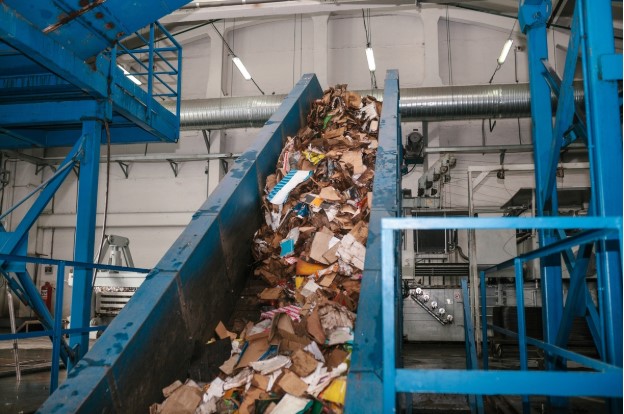
Businesses across every sector generate significant volumes of cardboard waste on a daily basis, from retail packaging to industrial shipping materials. Managing this waste responsibly is no longer optional — it is an environmental and operational necessity. Cardboard recycling has evolved into a sophisticated process supported by industrial-grade equipment that makes collection, sorting, and processing faster and more efficient than ever before. Whether you are a warehouse, distribution centre, or manufacturing facility, having the right recycling infrastructure in place reduces costs, supports sustainability targets, and ensures that valuable material is recovered rather than sent to landfill unnecessarily.
The Scale of Cardboard Waste in Commercial and Industrial Settings
The volume of cardboard generated by businesses is staggering. Warehouses receive daily deliveries packed in corrugated boxes, retail operations unpack shipments continuously, and manufacturers rely on cardboard for protective packaging throughout their supply chains. Without a structured approach to managing this output, cardboard waste quickly accumulates and creates operational inefficiencies. Compacted or shredded, cardboard recycling allows businesses to reduce the physical volume of their waste significantly, freeing up floor space and reducing the frequency and cost of collections. Understanding the scale of the problem is the first step toward building a recycling process that works practically within a real commercial environment.
How Industrial Shredders Transform Cardboard Waste Management
Industrial shredders are among the most effective tools available for processing large volumes of cardboard efficiently. Rather than allowing flattened boxes to pile up in skips or storage areas, shredders reduce cardboard into compact strips or chips that take up a fraction of the original volume.
This reduction in bulk makes storage, handling, and transportation far more manageable for facilities operating at scale. Beyond volume reduction, shredded cardboard also has significant reuse potential — it is widely used as protective packaging material, animal bedding, and compostable filler, giving businesses an opportunity to extract additional value from what would otherwise be straightforward waste. Industrial shredders are built to handle continuous, heavy-duty processing and integrate smoothly into existing waste management workflows.
Role of Sorting Systems in Effective Cardboard Recycling
Not all cardboard that enters a recycling stream is immediately ready for processing. Contaminated board — cardboard that has been soiled with food, oil, or other materials — must be separated from clean material before it can be effectively recycled. Industrial sorting systems play a critical role in this step, using mechanical and sometimes automated processes to identify and separate usable material from contaminated or non-recyclable waste.
Cardboard recycling that incorporates proper sorting produces a cleaner, higher-quality output that commands better value in the recycled materials market. For businesses committed to achieving strong environmental credentials, investing in sorting infrastructure is a practical step that improves both the quality and the volume of material successfully diverted from landfill.
Operational and Financial Benefits for Businesses
The business case for structured cardboard recycling goes well beyond environmental responsibility. Facilities that implement shredding and sorting systems typically see a measurable reduction in waste collection costs, since compacted or shredded material requires fewer collections than loose cardboard. Some businesses are also able to generate revenue by selling processed cardboard to recycling merchants, turning a cost centre into a modest income stream. Cardboard recycling programmes that are well-designed and consistently operated also support compliance with waste regulations, which are becoming increasingly stringent across many industries.
Conclusion
Achieving those results at scale depends on having the right infrastructure in place, and recycling sorting equipment sits at the heart of any serious cardboard waste programme. From conveyors and balers to automated separators, the right equipment transforms recycling from a manual, inconsistent task into a reliable, high-performing operation that delivers measurable value every day.
