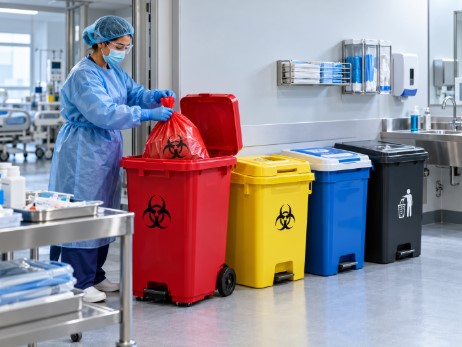
Healthcare facilities generate many different types of waste, ranging from ordinary packaging and paper to used sharps, contaminated materials, pharmaceuticals, chemicals, and radioactive substances. Although much healthcare waste is similar to general household waste, the hazardous portion requires specialized handling to protect healthcare workers, waste handlers, patients, communities, and the environment. The World Health Organization estimates that approximately 85% of healthcare waste is general, non-hazardous waste, while the remaining 15% can be infectious, toxic, corrosive, reactive, or otherwise hazardous. Understanding medical waste management therefore requires more than simply removing waste from a healthcare facility. It involves segregation, safe storage, collection, treatment, transportation, and appropriate final disposal.
What Is Medical Waste Management?
Medical waste management is the organized process of handling waste generated through healthcare activities from the point where it is produced through its final treatment or disposal. This can include waste from hospitals, clinics, laboratories, dental practices, research facilities, blood banks, veterinary facilities, and other healthcare environments.
Effective management begins where waste is generated. Different categories should be separated rather than mixing hazardous materials with ordinary waste. Proper segregation helps reduce unnecessary exposure and ensures that each waste stream receives an appropriate treatment or disposal method.
The exact requirements vary by jurisdiction. In the United States, for example, medical waste is primarily regulated by state environmental and health agencies, so healthcare facilities should check applicable local requirements before establishing disposal procedures.
What Types of Medical Waste Require Special Handling?
Healthcare waste encompasses several categories, and each presents different risks.
Infectious Waste
Infectious waste may contain pathogens capable of causing disease. Examples can include materials contaminated with blood or other body fluids, laboratory cultures, and certain materials used in treating patients with infectious conditions.
Sharps Waste
Needles, scalpels, blades, broken glass, and other sharp objects can cause puncture injuries and potentially transmit infection. Sharps should therefore be placed into appropriate containers at the point of use rather than being handled as ordinary waste.
Pharmaceutical and Cytotoxic Waste
Expired or unwanted medicines and materials contaminated with pharmaceuticals require appropriate disposal. Cytotoxic waste associated with certain cancer treatments can present additional hazards because some substances have genotoxic properties.
Chemical Waste
Healthcare facilities can generate solvents, laboratory reagents, disinfectants, sterilants, and other chemicals. Mercury-containing devices and certain batteries may also fall into hazardous healthcare waste categories.
Why Is Proper Medical Waste Management Important?
Improper handling can expose workers and the public to infectious agents, sharps injuries, toxic substances, and other hazards. The WHO identifies potential health effects including sharps-related injuries, chemical burns, toxic exposure, air pollution, and exposure to pharmaceutical or cytotoxic substances.
Environmental risks are also important. Untreated healthcare waste can contribute to contamination when disposal systems are inadequate. Poorly controlled treatment processes can release pollutants into the air, while inappropriate handling of chemicals can introduce hazardous substances into surrounding environments.
For these reasons, medical waste management should be incorporated into a healthcare facility’s broader environmental health, infection prevention, and occupational safety procedures.
What Are the Main Steps in Medical Waste Management?
A comprehensive waste program generally includes several connected stages.
1. Waste Minimization
Reducing unnecessary waste at the source can decrease the amount requiring treatment and disposal. The WHO recommends measures such as appropriate procurement, reducing unnecessary packaging, and using reusable products where safe and practical.
2. Segregation
Waste should be separated according to its characteristics and hazards. Sharps, infectious materials, pharmaceuticals, chemicals, radioactive materials, and general waste should not simply be combined into a single stream.
3. Collection and Storage
Collected waste should be stored securely in appropriate containers and designated areas. Containers need to be suitable for the type of waste they hold and should prevent leakage, accidental access, and unnecessary exposure.
4. Treatment
Different waste streams require different treatment approaches. Depending on the waste type and applicable regulations, treatment technologies can include autoclaving, steam treatment, microwaving, chemical treatment, or controlled incineration. The appropriate method depends on technical, environmental, regulatory, and operational factors.
5. Transportation and Final Disposal
Waste that leaves a healthcare facility may require controlled transportation and documentation. Final disposal should follow applicable federal, state, and local requirements.
How Should Chemical Waste Be Managed?
Chemical waste requires particular attention because chemicals can have toxic, corrosive, reactive, flammable, or environmentally hazardous properties. Healthcare facilities may generate chemical waste through laboratories, sterilization processes, cleaning activities, and diagnostic procedures.
Waste management chemical disposal should begin with identifying the substance and understanding its hazards. Chemicals should not automatically be poured down drains or mixed together simply because they are being discarded. Incompatible substances can create dangerous reactions, while improper disposal can contribute to environmental contamination.
Facilities should maintain appropriate labeling, storage, handling, and disposal procedures and follow applicable regulations for each chemical waste stream. Staff responsible for handling hazardous materials should also receive suitable training.
How Can Healthcare Facilities Improve Their Waste Programs?
A strong program begins with clearly documented procedures and assigned responsibilities. Staff should understand how to identify different waste categories, where each type belongs, how containers should be closed and labeled, and what to do if spills or other incidents occur.
Regular training is important because waste-handling procedures are only effective when consistently followed. Periodic reviews can also identify opportunities to reduce waste generation, improve segregation, and address problems before they become significant.
The WHO recommends an integrated approach covering waste minimization, segregation, handling, storage, transportation, treatment, disposal, and staff training.
Conclusion
Effective medical waste management protects people and the environment by ensuring that hazardous healthcare waste is identified, separated, handled, treated, and disposed of appropriately. Because healthcare waste includes several distinct categories, there is no single disposal method suitable for every material. Sharps, infectious waste, pharmaceuticals, chemicals, and radioactive materials each require consideration based on their specific hazards and applicable regulations. Facilities can strengthen their systems by minimizing unnecessary waste, maintaining proper segregation, training personnel, and using suitable treatment and disposal methods. Chemical waste deserves particular attention because inappropriate waste management chemical disposal can expose workers and communities to hazardous substances and create environmental risks. A structured, well-documented waste program helps healthcare organizations manage these responsibilities more consistently while supporting safer working and treatment environments.
