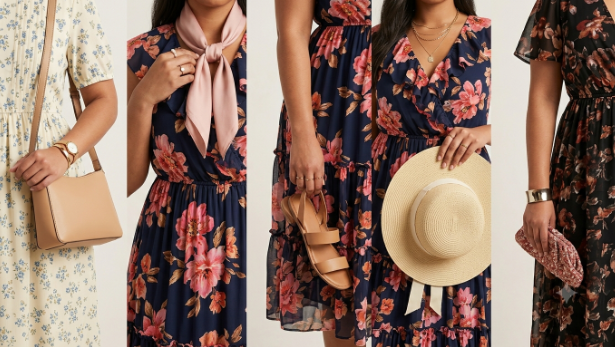
Floral prints remain a dependable part of women’s fashion because they can shift easily between romantic, casual, formal, and contemporary looks. The effect depends on more than the flowers themselves. Print scale, dress length, color contrast, fabric movement, neckline, and accessories all influence whether an outfit feels understated or bold.
For anyone building a versatile wardrobe, floral pattern dresses can work across multiple settings when the styling is balanced carefully. Current collections show the category extending well beyond traditional small flower prints, with options including maxi silhouettes, tiered designs, pleated bodices, lace-up backs, abstract patterns, tropical motifs, and mixed prints. Understanding how these details affect the overall outfit makes floral clothing much easier to style.
Choose the Print Scale According to the Look You Want
One of the first things to consider when selecting floral pattern dresses is the size of the print.
Smaller florals often create a softer and more delicate appearance. They can work particularly well for daytime events, casual lunches, and outfits where the wearer wants the print to remain subtle.
Larger flowers tend to create a stronger visual statement. Oversized motifs can make a simple silhouette feel more dramatic without requiring many accessories.
Current floral collections illustrate this range through everything from vintage-inspired floral prints and border florals to tropical and abstract designs. The best choice depends on whether the goal is to make the pattern the focal point or allow it to support the rest of the outfit.
Match Dress Length to the Occasion
Length has a major influence on how floral clothing feels.
Maxi floral pattern dresses often appear more flowing and occasion-ready, particularly when combined with tiered skirts, fitted bodices, or lightweight fabrics. They can suit weddings, evening events, holidays, and more polished daytime occasions.
Midi dresses offer a middle ground. Their length makes them adaptable enough for brunch, garden events, work-friendly styling, or semi-formal gatherings depending on the cut.
Mini dresses usually create a more casual or youthful look. They can be particularly useful in warm weather when styled with flat sandals, simple sneakers, or low heels.
A varied floral collection may include maxi, midi, mini, column, slip, halter, and tiered silhouettes, showing how much the same print category can change depending on construction.
Use Solid Accessories to Balance Busy Prints
When a dress already contains several colors or a detailed print, accessories usually work best when they are simpler.
Neutral shoes and bags can allow floral pattern dresses to remain the main visual feature. Beige, black, cream, tan, metallic, or another color already present in the print can create a cohesive outfit without competing with the pattern.
This does not mean accessories always have to be understated. A bold bag or shoe can work, but repeating too many strong patterns at once can make an outfit feel visually crowded.
A useful approach is to choose one dominant element. If the dress has a dramatic floral design, keep jewelry and accessories relatively restrained. If the print is subtle, there is more room for statement pieces.
Pay Attention to the Background Color
The background shade of a floral print can change its overall mood considerably.
Dark backgrounds such as black, burgundy, or navy tend to make flowers feel richer and more suitable for evening or transitional-season styling. Light backgrounds such as cream, ivory, blush, or pale blue usually create a fresher effect.
Examples in current collections range from black floral and blush floral designs to blue-champagne, orange-beige, pink-orange, and blue-ivory combinations.
When choosing floral pattern dresses, consider whether the background color works with shoes, jackets, and other pieces already in the wardrobe. This can make the dress much easier to wear repeatedly.
Let the Silhouette Guide Your Styling
Print attracts attention, but silhouette determines how a dress moves and frames the body.
A fitted column dress creates a different effect from a loose tiered maxi. Likewise, a halter neckline feels different from a pleated bodice or lace-up back.
The current category includes several structural details, including pleating, tiering, cutouts, asymmetric shoulders, lace trim, ruffles, and lace-up backs. These features can influence how formal or relaxed an outfit appears.
For highly detailed silhouettes, minimal styling often works best. A simpler dress shape can support more elaborate accessories without overwhelming the outfit.
Layer Floral Dresses for Different Seasons
Floral pattern dresses do not have to be reserved for spring and summer.
During cooler months, a floral midi or maxi can be layered with a structured blazer, cardigan, cropped jacket, or fitted knit. Ankle boots can replace sandals, while deeper accessories can make lighter floral prints feel more seasonally appropriate.
Darker floral backgrounds are especially easy to carry into autumn and winter. Conversely, bright tropical or pastel patterns naturally suit warmer weather but can still be adapted through layering.
The key is to treat florals as a pattern rather than a seasonal rule.
Consider Fabric Movement and Structure
Fabric affects both comfort and how a print is perceived.
Flowing material creates movement that can make large florals appear softer. Structured fabrics produce cleaner lines and can make geometric or high-contrast floral patterns look more defined.
Pleats, tiers, and gathered fabric also alter how the pattern falls across the body. This is particularly relevant for dresses featuring border prints or directional motifs because the placement of the design can become part of the garment’s overall shape.
When shopping online, examining photographs from several angles can help reveal how the pattern behaves when the dress is worn rather than viewed flat.
Keep Occasion Styling Proportionate
The same floral dress can often be styled for more than one setting.
For daytime, flat sandals, understated jewelry, and a simple bag can keep the look relaxed. For weddings or evening events, heels, a structured clutch, and refined jewelry can make the outfit feel more formal.
This versatility is one reason floral pattern dresses remain useful wardrobe pieces. Instead of assigning one dress to a single occasion, styling choices can substantially change its overall character.
However, dress codes still matter. A casual floral mini may not suit a formal evening event, while an elaborate floor-length floral gown could feel excessive for a relaxed daytime gathering.
Conclusion
Styling florals successfully comes down to balance. Print size, background color, silhouette, dress length, fabric, and accessories should work together rather than compete for attention. Floral pattern dresses can range from subtle and versatile to highly expressive, which makes the category adaptable across different seasons and occasions. When choosing a floral pattern dress, consider not only whether the print is attractive but also how the silhouette, colors, and length fit into the rest of your wardrobe and the situations in which you expect to wear it. A thoughtful approach makes floral clothing easier to repeat and restyle. By coordinating accessories, layering appropriately, and selecting a print scale that matches the desired effect, floral dresses can remain practical wardrobe pieces rather than one-occasion outfits.
