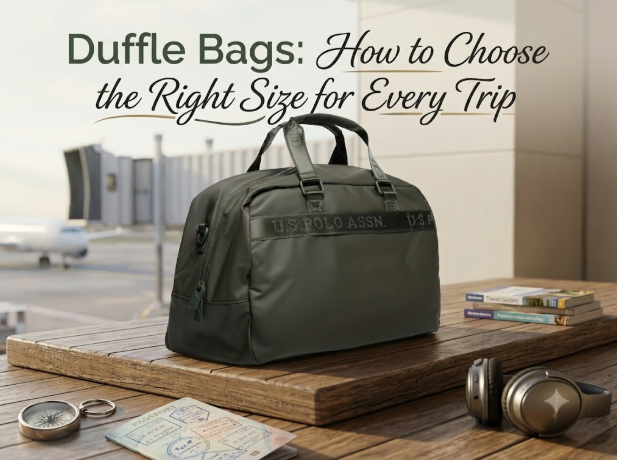
Travel bags need to balance capacity, comfort, durability, and convenience. A bag that is too small can make packing difficult, while one that is oversized may become heavy, awkward to carry, or unsuitable for airline limits. For short breaks, gym visits, road trips, or flexible travel, duffle bags remain popular because their soft-sided construction makes them easy to pack and adapt to different types of luggage.
Choosing the right option requires more than looking at overall dimensions. Handle design, shoulder straps, internal organisation, material, closure type, and intended travel length can all affect usability. Understanding these details can help travellers choose a bag that works across several situations rather than only one trip.
Match the Bag Size to the Length of the Trip
The right size depends largely on how long you plan to travel and how much you normally pack.
Small duffle bags are often suitable for overnight stays, gym use, or carrying a change of clothes and a few essentials. Medium sizes can work well for weekend trips, while larger models may accommodate several days of clothing, shoes, and toiletries.
However, bigger is not always better. A very large bag can become difficult to carry once fully packed. Travellers should therefore estimate their realistic packing needs instead of automatically choosing the maximum capacity available.
Check Airline Cabin Requirements Before Flying
If the bag will be used for air travel, dimensions matter. Airlines set their own cabin baggage limits, and these can vary by ticket type and route. Soft-sided duffle bags may offer some flexibility because they can compress slightly when not completely full, but travellers should never assume a bag will qualify as cabin luggage simply because it looks compact.
Before flying, compare the bag’s external dimensions with the airline’s current allowance. Handles, wheels, and external pockets may be included in the measurement.
Weight limits can be just as important as size, particularly when the bag itself is made from heavier materials.
Decide Whether You Need Multiple Compartments
A single large compartment provides flexibility, but smaller sections can make packing much more organised.
Internal pockets can separate documents, chargers, toiletries, or smaller accessories. External pockets provide quicker access to items such as boarding passes or headphones.
Some duffle bags also include dedicated shoe compartments, which can help keep footwear separate from clean clothing.
Travellers who prefer packing cubes may not need as many internal dividers. In that case, a simpler main compartment can provide more usable space and make the bag easier to adapt for different journeys.
Compare Carrying Options Carefully
Comfort is particularly important when a bag does not have wheels.
Traditional handles are useful for short distances, but a detachable shoulder strap can make carrying easier through stations, airports, or city streets. Padding on the strap can reduce pressure when the bag is heavily loaded.
Some duffle bags also include backpack-style straps, offering another carrying option when both hands need to remain free.
Before buying, check where the straps attach to the bag. Reinforced attachment points are important because these areas carry substantial stress when the bag is full.
Look for Durable Materials and Strong Stitching
Travel bags are frequently placed on floors, lifted into vehicles, and subjected to repeated handling.
Material choice therefore affects both appearance and longevity. Leather can offer a more structured and refined look, while nylon, polyester, canvas, and other textiles may provide lighter weight and easier maintenance.
Regardless of the material, duffle bags should have strong stitching around handles, shoulder-strap attachments, and high-stress seams.
Zips also deserve attention. A bag with durable fabric but a weak closure may still fail during travel. Larger zip pulls can also be easier to use when the bag is tightly packed.
Consider Water Resistance
Travellers cannot always avoid rain or wet surfaces.
A water-resistant exterior can help protect clothing and electronics during short exposure to moisture. It is important, however, to distinguish water resistance from full waterproofing.
Most ordinary duffle bags are not designed to remain dry if submerged or exposed to heavy rain for an extended period.
For additional protection, sensitive items such as electronics, passports, and important documents can be placed inside waterproof pouches or sealed internal bags.
Think About How the Bag Will Be Stored
Soft travel bags generally have an advantage when storage space is limited.
Unlike rigid suitcases, many duffle bags can be flattened or folded when empty, making them easier to store under a bed, on a shelf, or inside larger luggage.
This can be especially useful for people living in apartments or homes with limited storage.
However, leather and more structured designs may need to be stored carefully to avoid permanent creasing. Filling them lightly with clean paper or fabric can help maintain shape during longer periods of non-use.
Duffle Bags vs. Traditional Luggage
Both styles have advantages.
Rigid or wheeled luggage bags are often easier to move through airports because the traveller does not need to carry the full weight. Hard-sided cases can also offer greater protection for fragile belongings.
Duffle-style bags, by contrast, tend to be more flexible. They can fit into irregular vehicle spaces, adapt to changing loads, and work well for trips where mobility matters more than structured protection.
The better option depends on transportation, packing style, trip length, and whether the traveller expects to carry the bag for long distances.
Pack Heavy Items Near the Bottom
Good packing can make duffle bags more comfortable to carry. Heavy items such as shoes or toiletry kits should generally be placed toward the bottom and close to the centre of the bag. This helps prevent the weight from shifting excessively during movement.
Rolled clothing can make efficient use of irregular spaces, while packing cubes provide structure inside a soft bag.
Frequently used items should remain near the top or in external pockets so the entire bag does not need to be unpacked whenever something is required.
Avoid Overpacking
Soft bags can often expand slightly, but repeatedly forcing them beyond their intended capacity can place unnecessary strain on seams and zips.
An overfilled bag is also less comfortable to carry and may no longer fit within transport limits.
When using duffle bags, leaving a small amount of spare capacity can be useful for souvenirs, laundry, or items acquired during the trip.
A more selective packing approach also reduces overall weight, which can make moving between locations much easier.
Conclusion
The best travel bag is one that matches the length of the journey, transport method, packing style, and amount of gear being carried. Well-designed duffle bags combine practical capacity with durable materials, comfortable handles, reliable closures, and enough organisation for everyday travel. For travellers comparing different man bags in Malta, it is useful to consider whether the bag will mainly be used for commuting, weekend travel, business use, or longer trips before focusing on style alone. A versatile bag should remain comfortable when full and easy to store when empty. By checking dimensions, carrying options, compartment layout, material quality, and airline limits before buying, travellers can choose a design that works across a wider range of journeys.
