A still pond may look peaceful, but standing water often hides low oxygen, algae growth, and unpleasant odours.
Choosing floating fountains for large ponds is one of the most practical ways to add movement and oxygen while improving the look of the property. Pump power, spray pattern, and power supply all affect results, and a poor match wastes money. This guide explains how these fountains work, how to size them, and what to check before installation.
How a Floating Fountain Works
A floating fountain sits on the surface, supported by a buoyant base. A submerged pump draws water from below the surface and pushes it through a nozzle, where it sprays into the air. As droplets fall back, they absorb oxygen, and the circulation mixes water layers that would otherwise stay separated.
This process helps fish and beneficial organisms because oxygen levels rise, especially during warm weather. Better circulation also discourages stagnation, which is a common cause of surface scum and odour. The spray pattern of floating fountains for large ponds adds a visual feature that suits farms, private lakes, resorts, and landscaped grounds.
Sizing: Horsepower and Flow Rate
Pump size is the most important decision. Floating models are usually described by horsepower and gallons per hour (GPH). Common ratings include 1/3 HP at about 4,000 GPH, 1/2 HP at about 5,300 GPH, 3/4 HP at about 6,600 GPH, and 1 HP at about 8,000 GPH.
Higher flow moves more water and produces taller, wider sprays. For floating fountains for large ponds, stronger pumps generally make sense because they circulate a bigger volume and cover more surface area. Small ponds can do well with lower ratings, while a larger body of water may need 3/4 HP or 1 HP units, or more than one fountain.
Consider these variables when estimating size:
1. Surface area and average depth of the pond.
2. Desired spray height and width.
3. Presence of fish or planted areas.
4. Distance from the shoreline to the power source.
Power Supply and Cord Length
Most residential and farm-scale units run on standard 120-volt power. The electric cord must reach from the fountain to a protected outlet on shore, and many models include a cord of about 100 feet. Large ponds may require longer runs, so measure the distance before buying and use outdoor-rated, ground-fault-protected circuits.
A licensed electrician can install a dedicated outlet and confirm that the circuit handles the pump’s draw. Mooring ropes then hold the fountains in position so wind does not push them toward the bank.
Nozzles and Spray Patterns
Interchangeable nozzles change the fountain’s look. Some create tall columns, others produce layered tiers or wide bell shapes. Many packages include several nozzles, letting owners adjust the display seasonally.
Taller sprays look dramatic but lose more water to wind drift and evaporation. Lower, broader patterns aerate effectively and stay more stable on breezy sites. When you place floating fountains for large ponds near public areas, it is wise to test patterns on a calm day before settling on one.
Adding Lighting
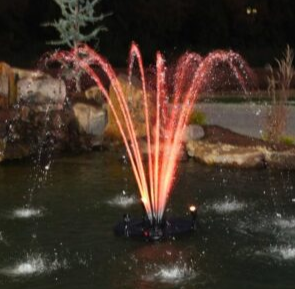
Many buyers add illumination so the pond remains attractive after dark. LED kits typically come in white or colour-changing versions, and they mount on the fountain ring. Illuminated sprays also outline the pond’s edge, which can improve visibility for guests walking near the water.
Lights on floating fountains for large ponds draw little power compared with the pump, but they require waterproof connections and a compatible transformer. Check that the kit voltage matches the fountain system.
Maintenance and Seasonal Care
Floating fountains need modest upkeep:
1. Clean the pump intake screen or debris bag regularly.
2. Check nozzles for clogging from algae or sediment.
3. Inspect cords and connections for damage.
4. Confirm that mooring lines remain secure.
5. Remove the unit before freezing weather in cold climates.
Ponds surrounded by trees may need weekly checks in autumn.
Always disconnect power before handling the fountain, and keep swimmers away while the unit operates.
Conclusion
Well-chosen floating fountains for large ponds improve oxygen, circulation, and appearance when they match the pond’s size, power access, and surroundings. Owners who want evening visibility can plan for water fountain lights from the start, which simplifies wiring and placement. Regular cleaning and careful mooring keep the system reliable through the seasons. Time spent on measurements today prevents costly changes after installation.
