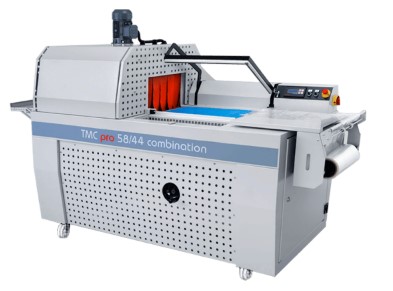
Shrink packaging is widely used to protect, stabilize, and present products in industries ranging from food and consumer goods to printing, electronics, and industrial manufacturing. One of the most commonly used materials for this process is polyolefin, often abbreviated as POF, because it combines clarity, strength, flexibility, and reliable shrink characteristics.
A polyolefin shrink machine is designed to wrap a product in polyolefin film, seal the film, and apply controlled heat so the material contracts around the item. Although the basic principle sounds straightforward, consistent shrink packaging depends on several variables working together, including film thickness, sealing quality, airflow, conveyor speed, temperature, and product dimensions.
What Is a Polyolefin Shrink Machine?
A polyolefin shrink machine is packaging equipment used to apply and shrink polyolefin film around individual products, grouped items, cartons, or other packaged goods. Depending on the required production volume, the equipment may operate manually, semi-automatically, or as part of a fully automated packaging line.
A typical shrink-wrapping system includes a film dispenser, sealing equipment, a conveyor, and a heated shrinking section. In semi-automatic configurations, an operator may position the product in the film before sealing. Fully automatic systems can feed, wrap, seal, and transport products continuously with minimal manual handling.
Polyolefin film is particularly suitable for this type of equipment because it can shrink tightly around different shapes while maintaining a clear appearance.
How Does a Polyolefin Shrink Machine Work?
The operation of a polyolefin shrink machine can generally be divided into wrapping, sealing, heating, shrinking, and cooling.
First, the product is introduced into polyolefin film. Center-folded film is commonly used with L-sealers, while automated side-sealing systems may be used when continuous packaging speeds are required.
Once the product is surrounded by film, the open edges are sealed. The seal must be strong enough to remain intact when the film begins contracting.
The wrapped package then moves into a heated chamber on a conveyor. Inside this section, circulating hot air transfers energy to the polyolefin film. The heat causes the oriented polymer structure of the film to relax, resulting in controlled contraction around the product. Proper airflow helps distribute heat across the top, sides, and underside of the package for more even shrinking.
After leaving the heated section, the film cools and stabilizes in its new shape.
Why Is Temperature Control Important?
Temperature is one of the most important operating variables in a polyolefin shrink machine, but it should never be considered independently.
Polyolefin films are available in different formulations and thicknesses, so the ideal operating conditions can vary. Some POF films may operate effectively within tunnel temperature ranges around 150°C to 180°C, although the exact setting depends on factors such as film gauge, line speed, package dimensions, and equipment design.
When heat is too low, the film may not contract completely. This can leave wrinkles, loose corners, or excess film around the package.
Excessive heat can create a different set of problems, including film distortion, weak areas, holes, or damaged seals. Therefore, operators normally balance three major variables:
- Tunnel temperature
- Conveyor speed
- Airflow
Adjusting one variable may require adjustments to the others.
How Do Conveyor Speed and Dwell Time Affect Shrink Quality?
Conveyor speed determines how long a package remains exposed to heat. This exposure period is commonly referred to as dwell time.
If a conveyor moves too quickly, the film may leave the heated chamber before sufficient shrinkage occurs. If it moves too slowly, the film and possibly the packaged product may receive excessive heat.
This is why an effective polyolefin shrink machine should allow the conveyor speed to be adjusted according to the type of film and package being processed.
Product geometry also matters. A small, lightweight carton can behave differently from a large multipack or irregularly shaped product even when both use the same film.
Why Does Airflow Matter in Shrink Packaging?
Uniform airflow is essential because simply increasing tunnel temperature does not guarantee an even result.
Inside shrink packaging equipment, fans or blowers circulate heated air around the wrapped product. Balanced airflow helps transfer heat consistently to different surfaces of the package. Poor circulation can cause one side of the film to shrink faster than another, producing wrinkles, loose areas, or distorted seals.
Modern equipment may therefore provide adjustable airflow controls or multiple heating zones so shrink conditions can be better matched to different package sizes.
What Products Can Be Packaged With Polyolefin Film?
A polyolefin shrink machine can be used for many types of packaged goods because POF film is flexible and can conform to a wide variety of shapes.
Common applications include boxed products, printed materials, household goods, cosmetics, food packages, multipacks, electronics, and retail products.
The appropriate equipment configuration depends on more than the product category. Packaging engineers also consider package dimensions, product sensitivity to heat, required production speed, film gauge, sealing method, and the desired finished appearance.
What Should Be Considered When Selecting a Machine?
Choosing shrink packaging equipment should start with the product and production requirements rather than machine capacity alone.
One important consideration is the maximum package size because both the sealing area and tunnel opening must comfortably accommodate the product. Throughput is another major factor. Operations handling occasional batches may not require the same level of automation as production lines processing products continuously.
Film compatibility should also be evaluated. Different films respond differently to temperature, airflow, and dwell time. Equipment therefore needs sufficient adjustment to provide stable operating conditions across the intended range of packaging materials.
Energy consumption, maintenance access, conveyor design, sealing consistency, and integration with upstream or downstream equipment should also be considered.
What Causes Poor Shrink-Wrap Results?
Several common problems can occur when a polyolefin shrink machine is not properly adjusted.
Wrinkles may indicate insufficient heat, inadequate dwell time, poor airflow, or excessive film around the product. Burn holes can indicate excessive temperature or prolonged heat exposure. Weak or opening seals may result from incorrect sealing conditions rather than the tunnel itself.
Another common issue is uneven shrinking. This can occur when air circulation is unbalanced or when the product blocks heated air from reaching particular areas.
Rather than changing several settings simultaneously, operators can often identify problems more effectively by adjusting one variable at a time and observing the result.
Conclusion
Polyolefin shrink packaging depends on the coordinated operation of film handling, sealing, conveying, heating, and airflow systems. A properly configured polyolefin shrink machine controls these variables so polyolefin film can contract consistently around products without unnecessary film distortion or product exposure to excessive heat. Within many packaging lines, heat shrink tunnels provide the controlled thermal environment needed to activate the film after sealing. Their performance depends on matching temperature, airflow, and conveyor speed to the film gauge and package characteristics rather than relying on a single universal setting.
