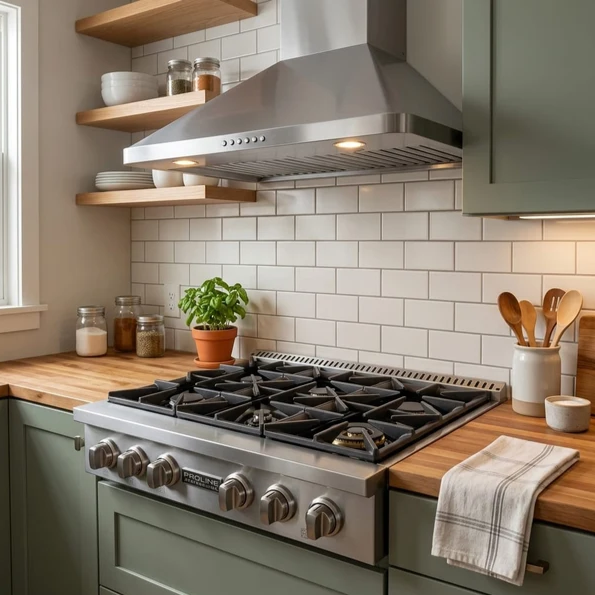
The cooktop is one of the most frequently used elements in a kitchen, so choosing the right one can influence both everyday convenience and cooking performance. Gas models remain popular because they provide visible flames, direct heat, and flexible temperature control for a variety of cooking techniques.
When comparing gas stove tops, homeowners should consider more than burner count and appearance. Dimensions, burner configuration, surface materials, heat output, controls, cleaning requirements, and the overall kitchen layout can all affect how well a cooktop fits a particular space.
What Are Gas Stove Tops?
Gas stove tops use burners fueled by natural gas or, with the appropriate conversion, liquid propane to generate direct heat beneath cookware. Unlike an electric surface, the flame provides an immediate visual indication of the heat being produced and can be adjusted directly through the burner controls.
Gas rangetops are available in different widths and configurations to accommodate kitchens with different space requirements. currently offers Proline gas rangetops in 30-, 36-, and 48-inch sizes, along with a range of ZLINE gas rangetop options.
Consider the Number and Arrangement of Burners
The number of burners is an important starting point, but their arrangement can be just as significant. A Gas stove tops with four burners may be sufficient for everyday meals, while larger households or frequent entertainers may benefit from six or eight burners.
Larger models can provide more room for multiple pots and pans, reducing the need to move cookware while preparing several dishes. Think about the cookware used most often before selecting a configuration. Several large pans require more space between burners than a collection of smaller saucepans.
Compare Burner Power and Heat Control
Burner output can affect how effectively a cooktop handles different cooking techniques. High-output burners can be useful for rapidly boiling water or searing food, while lower heat settings are important for simmering sauces and delicate dishes.
Some modern gas rangetops are designed with burners capable of providing a broad range of heat. For example, ZLINE’s DuoPro cooktops feature dual-ring burners that allow the inner and outer rings to operate separately, supporting both lower simmering temperatures and higher-heat cooking.
This range of control can be particularly useful for households that prepare meals requiring different temperatures at the same time.
Choose a Surface Material That Fits Your Kitchen
The cooking surface affects both appearance and maintenance. Stainless steel remains a common choice because it complements many kitchen styles and coordinates easily with other stainless appliances.
Today’s stainless steel stove tops can also combine professional-style appearance with features designed for everyday cooking. The cooking surface should also be considered from a cleaning perspective. A well-designed surface with accessible components can make it easier to wipe away spills and maintain the appliance after cooking.
Match the Cooktop to Available Space
Measurements should be confirmed before purchasing any cooktop or rangetop. The appliance width needs to correspond with the cabinet opening and available countertop area, while surrounding surfaces should provide sufficient clearance according to the manufacturer’s installation requirements.
Planning the cooktop alongside ventilation is also important. Gas cooking produces heat and combustion byproducts, while frying and high-heat cooking can create smoke and grease. A suitable range hood should therefore be considered as part of the overall kitchen design.
Look at Grates and Everyday Usability
The grate design can affect how easily cookware moves across the cooking surface. Continuous or streamlined cast-iron grates can provide a stable platform for pots and pans while allowing cookware to be moved between burners.
Some ZLINE models use cast-iron grates designed around multiple cooking zones, while certain models also include griddle accessories. These features can provide additional flexibility when preparing breakfasts, grilled foods, or larger meals.
Controls are another practical consideration. Front-mounted knobs can make burner settings easy to reach while keeping the cooking surface visually organized.
Consider Safety and Fuel Requirements
Gas appliances require appropriate installation and fuel connections. Before purchasing, homeowners should determine whether the kitchen is supplied with natural gas or whether liquid propane will be used.
Some models include LP conversion kits, but conversion should be completed by a qualified professional when required. ZLINE’s product information, for example, specifies professional installation for LP conversion on applicable models.
Proper ventilation and installation are also important considerations for gas cooking appliances. Manufacturer instructions should always be followed for clearances, fuel connections, and ventilation requirements.
How to Select the Right Gas Cooktop
The best choice depends on how the kitchen is used. A smaller four-burner model may suit a compact kitchen or household with straightforward cooking needs, while a six- or eight-burner rangetop can provide the additional workspace needed for frequent multi-dish cooking.
Compare width, burner count, heat output, surface construction, grate design, controls, and fuel compatibility before making a decision. It is also worth considering how the cooktop will coordinate with the oven, refrigerator, range hood, and other major appliances.
Conclusion
Choosing a gas cooktop involves balancing cooking performance, available space, design, and practical maintenance. By comparing these features, homeowners can select that provide the right combination of performance and functionality for their kitchen while creating a cohesive overall design with Smart Home Luxury. Burner configuration and heat range can influence everyday cooking, while surface materials and grate design affect appearance and usability. Careful measurements and proper fuel and ventilation planning are equally important.
