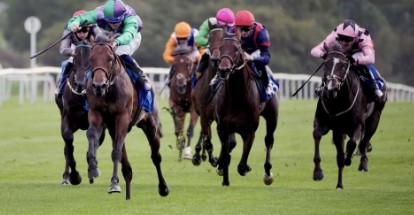
Few sporting institutions in Bengaluru carry as much old-world charm as the Bangalore Turf Club. Founded nearly a century ago, it has grown from a modest cavalry pastime into one of India’s most respected racing venues, known equally for its challenging track and its rich social history. For anyone following the sport, understanding how the club developed, what makes its racecourse distinctive, and how its calendar fits into the wider Indian racing scene adds real context to following results. This piece takes a closer look at its origins, its signature races, and what sets it apart.
From Cavalry Pastime to Premier Venue
The club traces its roots to 1920, when British cavalry units stationed in Bangalore began organising horse racing as a recreational activity. The earliest races were run at Agram, close to what is now HAL Airport, before the course shifted to Lalbagh in 1928. Prominent figures of the era, including Sir Mirza Ismail and Sir M. Visvesvaraya, played a role in developing and promoting the sport locally during these formative years, helping it grow beyond a purely military pursuit.
Settling at High Grounds
The club moved to its present location at High Grounds in 1951, after acquiring land from the government and building a new racecourse and grandstand. A year later, in 1952, the Bangalore Turf Club became a member of the Turf Authorities of India, a milestone that allowed it to begin hosting major national races such as the Indian Derby, the Indian Oaks, and the Indian 2000 Guineas. This period marked the club’s transition into a fully established fixture on India’s racing calendar.
A Track Built for a Challenge
What sets the Bangalore track apart from many others in the country is its terrain. The oval course measures roughly 1,950 metres and features four sharp turns along with notable gradient changes, including a steep downhill stretch followed by a climb, all combined with a comparatively short home straight. This layout demands both speed and stamina from horses and jockeys alike, making it one of the more physically demanding tracks on the Indian circuit.
Signature Races and Events
Among its most prestigious fixtures is the Bangalore Derby, alongside high-profile events such as the Indian Derby run under BTC’s banner. The club has also produced some of the finest horses and jockeys in Indian racing history over the decades. Races are typically well attended, drawing enthusiasts, bettors, and casual visitors alike to experience the atmosphere trackside.
Facilities Beyond the Racecourse
Spread across roughly 85 acres, the club maintains a main grass track along with training tracks, an equine swimming pool, over a thousand stables, and a veterinary hospital. Despite being comparatively smaller in land area than some other Indian turf clubs, the facility has been developed efficiently to support training, racing, and related equestrian activities such as riding lessons and polo.
Tracking Race Results and Updates
Following race-day outcomes at the Bangalore Turf Club means keeping an eye on published fields, entries, and results throughout the racing season. As with most Indian turf clubs, schedules and outcomes are updated regularly, allowing racing enthusiasts to track how horses, jockeys, and trainers are performing across the year.
Conclusion
From its beginnings as a cavalry pastime to its current standing as a nationally recognised turf authority, the Bangalore Turf Club has built a legacy defined by its challenging track and storied races like the Bangalore Derby. Its distinctive terrain and long-standing traditions continue to draw racing enthusiasts each season. For those following the sport more broadly, comparing Bangalore’s calendar and races with a club like RWITC Mumbai, which hosts its own racing season at the Mahalaxmi Racecourse, offers useful perspective on how India’s major turf clubs differ in character and structure.
