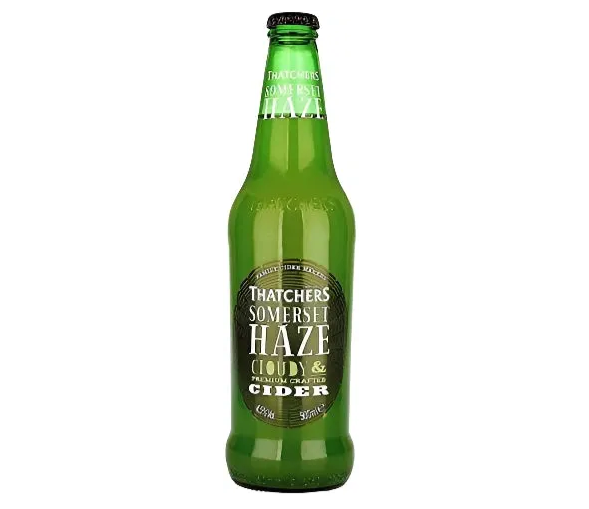
Cloudy cider has become increasingly recognisable for its natural appearance, fruit-forward flavour and refreshing character. Unlike clear ciders, which are commonly filtered to remove suspended particles, cloudy varieties retain elements that contribute to their hazy appearance and distinctive sensory profile. Understanding the apples used, fermentation, appearance, sweetness and serving characteristics can help explain why this style has become an important part of the modern cider category. Thatchers Haze is a useful example because it combines several eating-apple varieties with a naturally cloudy appearance and a crisp, sweet finish.
What Makes Cloudy Cider Different?
The most obvious difference between cloudy and clear cider is appearance. Clear cider generally undergoes clarification or filtration designed to remove suspended material, while naturally cloudy cider retains elements that create a hazy or opaque appearance.
Cloudiness does not necessarily mean that a cider is unfiltered in every technical sense. Different producers use different production methods, but natural haze can come from components of the apple juice that remain suspended in the finished drink.
In the case of Thatchers Haze, the producer specifically identifies Jonagold apple juice as the source of its naturally cloudy appearance. The cider is described as refreshing, cloudy and sweet, with a crisp finish.
The Apple Varieties Behind the Flavour
Apple selection is one of the most important factors in cider production. Apples contribute sugars for fermentation as well as acids, aromas, tannins and other compounds that influence the finished drink.
Thatchers Haze uses a combination of Discovery, Falstaff, Gala and Jonagold apples. Each variety contributes characteristics to the overall blend rather than functioning as an isolated flavour. The producer describes Discovery as an early apple, Falstaff as crunchy, Gala as a popular eating apple and Jonagold as a sweet variety that also provides the cider’s natural haze.
Using several varieties allows a cider maker to build a more balanced profile. One apple might contribute acidity, another sweetness, while another can provide aroma or body. Blending therefore gives cider makers greater control over the final sensory character.
Why Jonagold Is Important to the Haze
Jonagold plays a particularly interesting role in this cider because its juice contributes to the cloudy appearance. This is not simply a visual effect added after production; it is connected to the characteristics of the apple juice itself.
Thatchers explains that gently rolling the bottle or can before opening can help “waken” the Haze. This allows the suspended components to become more evenly distributed throughout the cider.
That characteristic also demonstrates why cloudy cider should not automatically be treated as a flaw or sign of poor clarification. In products deliberately designed around a hazy appearance, cloudiness is part of the intended presentation.
Understanding the 4.5% ABV
Alcohol by volume, or ABV, indicates the percentage of alcohol in a beverage by volume. Thatchers Haze is listed at 4.5% ABV by the producer, placing it within the range of many mainstream apple ciders.
Bottle size and ABV are useful details when comparing cider products because they help consumers understand both the quantity and alcoholic strength of a serving. A 500ml bottle at 4.5% ABV contains a measurable amount of alcohol, so responsible consumption remains important.
How Sweetness and Acidity Affect Cider
The balance between sweetness and acidity is central to how cider tastes. Residual or perceived sweetness can create a fuller, fruitier impression, while acidity provides freshness and prevents the drink from seeming excessively heavy.
Thatchers describes Haze as cloudy and sweet, with a crisp finish.
This combination helps explain its refreshing character. Sweet apple flavours provide the fruit-forward foundation, while acidity and carbonation contribute to a cleaner finish. Serving temperature can further influence the experience, with chilled cider generally making its refreshing characteristics more noticeable.
Food Pairings for Cloudy Apple Cider
The balance of sweetness and acidity can make cloudy cider suitable for a range of foods. Stronger savoury flavours can work particularly well because sweetness provides contrast while acidity refreshes the palate.
Thatchers recommends Haze with foods including Cheddar and chorizo croquetas, mango chicken curry and sticky charcoal barbecue flavours.
Cheese is especially interesting as a pairing because the cider’s sweetness can contrast with salty, savoury and creamy characteristics. Spicy dishes can also benefit from a fruit-forward cider, as the sweetness and chilled temperature provide a different sensation alongside chilli heat.
Serving and Storage Considerations
Cider is generally best served chilled, particularly when the intended style emphasises freshness and refreshment. A clean glass can also make it easier to appreciate the drink’s colour, aroma and carbonation.
For naturally cloudy cider, consumers should also understand that sediment or suspended material can be part of the intended appearance. Gently distributing the contents before opening can help produce a more consistent haze, following the producer’s guidance.
Once opened, cider gradually loses carbonation. Keeping an opened bottle refrigerated can slow this process, although it is generally best consumed soon after opening for the freshest sensory experience.
Nutritional and Dietary Information
Cider contains alcohol as well as carbohydrates and naturally occurring or added sugars depending on the product and production process. Thatchers lists Haze at 49 calories and 4.1g of sugar per 100ml, according to its published nutritional information. It also states that the cider is suitable for vegetarians, vegans and coeliacs and is gluten-free, while containing sulphites for freshness.
These details can be useful for consumers who actively compare beverages based on nutritional or dietary requirements.
Why Apple Selection Matters in Modern Cider
Modern cider production demonstrates how changing the apple blend can create substantially different results. Traditional cider apples often contain higher levels of tannins and acidity than many eating apples, while dessert and culinary varieties can contribute different combinations of sweetness, aroma and acidity.
Haze uses selected eating apples to achieve its particular style. The result is a cider designed around fruitiness, sweetness and a naturally cloudy appearance rather than the deeper tannic character associated with some traditional bittersweet cider varieties.
This distinction helps explain why cider should be considered a broad category rather than a single flavour profile.
Conclusion
Cloudy cider illustrates how apple selection, juice characteristics, fermentation and presentation can shape the final drinking experience. This combines Discovery, Falstaff, Gala and Jonagold apples, with Jonagold contributing to its naturally cloudy appearance. Its 4.5% ABV, sweet apple character and crisp finish place it firmly within the refreshing cloudy cider style.
For consumers exploring different alcoholic beverages, understanding these production details makes it easier to compare styles based on flavour, strength, ingredients and serving characteristics. Retailers such as RV Drinks can also provide access to different cider and drinks categories, allowing consumers to explore how production methods and ingredients influence the final beverage.
