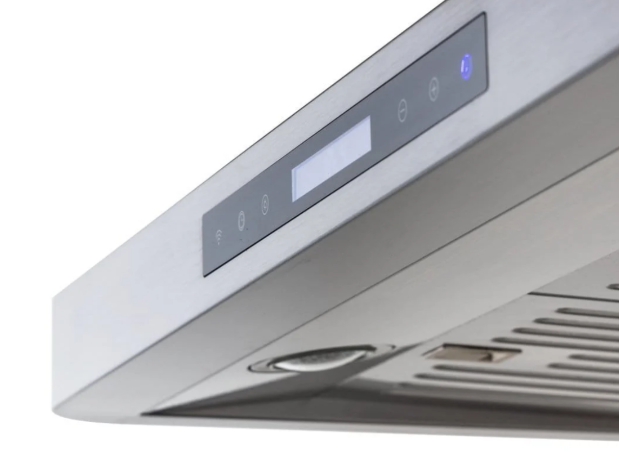
Kitchen ventilation affects air quality, cooking comfort, cabinet cleanliness, and the overall usability of a cooking space. An under cabinet vent hood 30 inch can be a practical solution for kitchens where the range sits beneath standard wall cabinets and available space is limited. Unlike larger chimney-style hoods, an under-cabinet model is designed to fit beneath cabinetry while providing ventilation directly above the cooking surface.
Choosing the right hood involves more than matching its width to the stove. Homeowners should consider airflow capacity, duct size, mounting height, cooking habits, cabinet dimensions, noise, and whether the system vents outdoors. Manufacturer guidance consistently emphasizes that proper duct design and installation are important for maintaining effective airflow.
What Is an Under Cabinet Vent Hood 30 Inch?
An under-cabinet vent hood 30 inch is a range hood designed to mount underneath a wall cabinet above a cooking surface approximately 30 inches wide.
The 30-inch width is common in residential kitchens. For example, a 30-inch Broan under-cabinet model is designed specifically for this configuration, although its specifications demonstrate why buyers should examine individual product dimensions rather than assuming every 30-inch hood has identical depth, ducting, or airflow characteristics.
Under-cabinet hoods can be ducted through the top or back of the unit, depending on the model and kitchen layout. Some configurations may also offer recirculating operation, but a vented installation requires a properly designed path to the exterior.
Why Choose an Under-Cabinet Range Hood?
The main advantage of an under-cabinet hood is efficient use of kitchen space. The hood occupies the area beneath an existing cabinet rather than requiring a separate chimney structure.
This configuration can be useful when:
1. Upper cabinets are already installed
2. Kitchen space is limited
3. A simple visual design is preferred
4. The cooking surface is approximately 30 inches wide
5. Existing ductwork can be connected conveniently
6. Cabinet storage needs to be preserved
A properly sized hood also places the intake close to the cooking surface, helping capture smoke, grease, heat, steam, and odors before they spread throughout the kitchen.
Proline notes that its 30-inch under-cabinet models are designed around standard residential cooking zones and can be configured for certain top or rear venting arrangements.
How Much CFM Does a 30-Inch Hood Need?
CFM, or cubic feet per minute, measures how much air a ventilation system can move. The correct airflow capacity depends on the cooking equipment and the type of food preparation rather than width alone.
A household that mainly boils, simmers, and prepares light meals may have different ventilation requirements from one that frequently sears meat, stir-fries, grills, or cooks with high heat.
Higher CFM is not automatically better. The duct system must be capable of supporting the hood’s airflow. Pacific Range Hoods, for example, notes that undersized ductwork can restrict airflow and reduce hood efficiency.
For that reason, buyers should consider the hood’s rated CFM together with its required duct diameter and the length and configuration of the duct route.
What Duct Size Does an Under-Cabinet Hood Need?
Duct size is one of the most important technical considerations when selecting an under-cabinet vent hood 30 inch.
Requirements vary by model. Some 30-inch hoods use 6-inch round ducting, while other products specify larger or differently shaped ductwork. Broan, for example, offers a 30-inch under-cabinet model with a 3¼-by-10-inch duct configuration, while another Broan installation guide specifies a 7-inch round duct option for a particular model.
This variation demonstrates why duct size should never be selected solely according to the hood’s width.
A good installation generally uses:
1. The manufacturer’s specified duct size
2. Metal ductwork
3. A relatively short route
4. Minimal elbows and transitions
5. Properly sealed joints
6. An exterior wall or roof termination
Installation guidance commonly recommends keeping the duct route as straight and short as practical because long runs and multiple bends can reduce ventilation performance.
How High Should an Under-Cabinet Hood Be Mounted?
Mounting height affects both performance and safety. The appropriate distance varies between products, so the range hood and cooking appliance manufacturer’s instructions should always take priority.
Some installation manuals recommend approximately 27 to 30 inches between the cooking surface and the bottom of the hood, while other models allow different ranges.
A hood mounted too high may capture cooking vapors less effectively. A hood mounted too low can create clearance, heat, and accessibility concerns.
Before installation, homeowners should therefore compare the requirements for both the hood and the cooktop or range.
Does a 30-Inch Hood Fit Every 30-Inch Stove?
Not necessarily.
Although both products may be described as 30 inches wide, their actual dimensions and installation requirements can vary. Cabinet depth, hood depth, burner arrangement, mounting height, and duct location all affect compatibility.
The hood should provide appropriate coverage over the active cooking area. Buyers should measure:
1. Cooking surface width
2. Cooking surface depth
3. Cabinet width
4. Cabinet depth
5. Available clearance
6. Hood dimensions
7. Existing duct location
8. Electrical connection location
A wider cooking surface may require a wider ventilation system. Conversely, installing an unnecessarily large hood can create space and cabinet-design challenges.
How Does Duct Routing Affect Performance?
The duct path can significantly influence how effectively a hood moves air.
A short, straight duct route generally creates less resistance than a long route with numerous bends. Installation instructions for under-cabinet hoods commonly advise minimizing elbows, transitions, and unnecessary duct length.
The duct should also terminate outdoors rather than into an attic, cabinet cavity, garage, or another enclosed space. Manufacturer installation guidance specifically warns against terminating ventilation systems in enclosed areas.
When planning a new kitchen, it is therefore useful to determine the duct route before purchasing the hood.
What Features Should You Compare?
When evaluating a 30-inch under-cabinet vent hood, look beyond the basic width specification.
Important features include:
- Airflow capacity: Make sure the CFM rating suits the cooking equipment.
- Duct configuration: Confirm that the hood matches the planned duct route.
- Mounting dimensions: Check cabinet and ceiling clearances.
- Noise rating: Compare operating noise if quiet cooking is important.
- Lighting: Consider whether the integrated lighting adequately illuminates the cooking surface.
- Filters: Look for removable filters that can be cleaned according to the manufacturer’s instructions.
- Controls: Evaluate buttons, switches, or electronic controls for ease of use.
- Venting direction: Determine whether top or rear discharge works better for the kitchen.
- Installation requirements: Check electrical and structural requirements before installation.
How Should You Maintain an Under-Cabinet Hood?
Regular maintenance helps preserve ventilation performance.
Grease filters should be cleaned according to the manufacturer’s instructions, particularly in kitchens where frying and high-heat cooking are frequent. Grease accumulation can affect airflow and create an unnecessary fire-related concern.
Homeowners should also periodically inspect accessible duct connections and the exterior termination for blockages or damage. If airflow decreases noticeably or unusual vibration and noise develop, the system should be inspected rather than simply operated at a higher setting.
Keeping the ventilation path clean is also important for maintaining consistent airflow.
What Should You Check Before Installation?
Before purchasing an under cabinet vent hood 30 inch, use this checklist:
1. Measure the available cabinet space.
2. Confirm the hood’s actual width and depth.
3. Check the required mounting height.
4. Identify the duct exit location.
5. Verify required duct dimensions.
6. Calculate the practical duct route.
7. Minimize unnecessary bends and transitions.
8. Confirm electrical requirements.
9. Review local building requirements.
10. Follow both hood and cooking-appliance manufacturer’s instructions.
Planning these details in advance can prevent compatibility problems after the hood has been purchased.
Conclusion
An under-cabinet vent hood 30 inch can be an efficient choice for kitchens that combine standard-size cooking equipment with limited overhead space. Its effectiveness, however, depends on more than the hood’s width. Airflow capacity, duct size, mounting height, cabinet dimensions, and the overall ventilation route all contribute to performance. For homeowners comparing ventilation configurations, an under cabinet kitchen hood vent can be a practical option when the available cabinet space, cooking surface, duct route, and hood specifications are compatible. Careful measurements and proper installation are ultimately more important than choosing a hood based on appearance or width alone.
