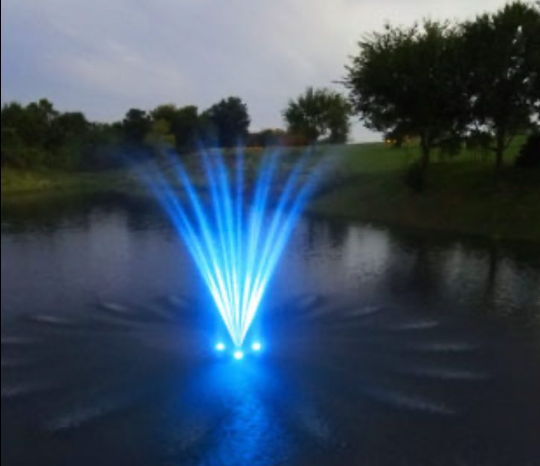
Outdoor water features can become far more visually striking after dark when lighting is planned correctly. Water fountain lights help reveal spray patterns, highlight movement, improve visibility, and create a stronger focal point in ponds, lakes, gardens, and commercial landscapes. Good lighting is not simply about making the water brighter. Fixture placement, beam angle, color temperature, electrical safety, maintenance, and the height or shape of the fountain all influence the final effect. A thoughtful lighting plan can make a fountain look balanced and dramatic without creating excessive glare or wasting energy.
Why Add Lighting to a Fountain?
Fountains naturally attract attention during the day, but much of their detail disappears after sunset.
Well-positioned water fountain lights allow the spray pattern and moving water to remain visible at night. Light passing through droplets can also create reflections and changing highlights that make the water feature feel more dynamic.
Lighting can be useful for:
1. Residential ponds
2. Garden fountains
3. Community lakes
4. Hotel landscapes
5. Golf courses
6. Commercial properties
7. Public water features
The goal should be to illuminate the water rather than overpower the surrounding landscape.
Choose Lighting Based on the Fountain Pattern
Different fountain patterns require different lighting arrangements.
A tall vertical jet may benefit from narrow upward beams that follow the height of the water. Wide fan-shaped or tiered fountains may require several fixtures positioned around the perimeter.
When selecting water fountain lights, consider:
1. Spray height
2. Spray width
3. Number of nozzles
4. Direction of water
5. Viewing angles
6. Fountain location
A single light may be enough for a small feature, while larger fountain displays may need multiple fixtures to create even illumination.
Understanding the water pattern before installing lights can prevent dark sections or overly bright hotspots.
Why Is Fixture Placement Important?
Light position has a major effect on the appearance of moving water.
Fixtures placed too far from the fountain may illuminate the surrounding pond more than the spray. Lights positioned too close may create intense glare or uneven brightness.
For many installations, upward-facing fixtures near the fountain base can illuminate water as it rises.
Multiple water fountain lights can also be arranged symmetrically to create balanced coverage from different viewing directions.
If the fountain is visible from several sides, lighting should be planned for all major viewpoints rather than only from the nearest shoreline.
LED Lights vs. Traditional Fountain Lighting
LED technology is widely used for outdoor fountain lighting because it offers high efficiency and long service life.
Compared with older incandescent or halogen fixtures, LEDs typically produce more light while consuming less electricity. They also generate less heat and can provide a wide range of color options.
Modern water fountain lights may include:
1. Fixed white lighting
2. Warm or cool white options
3. RGB color-changing LEDs
4. Programmable sequences
5. Dimming controls
For properties where lights operate for several hours every evening, energy efficiency can make a meaningful difference in long-term operating costs.
White or Colored Lighting: Which Is Better?
The right choice depends on the desired atmosphere.
White lighting can create a classic and elegant appearance. It often works well for residential landscapes, formal gardens, hotels, and properties where the fountain should blend naturally with surrounding architecture.
Colored water fountain lights can create a more dramatic effect. Blues and greens may complement water, while programmable systems can change colors for holidays, events, or seasonal displays.
However, using too many colors or rapid transitions can make a landscape feel overly busy.
For permanent installations, subtle programming often produces a more polished result than constant dramatic color changes.
Consider Brightness and Glare
More brightness does not always create a better display.
If fixtures are too powerful, they can create glare for people viewing the fountain from nearby paths, patios, roads, or buildings.
The most effective water fountain lights direct illumination toward the spray while limiting unnecessary light spill.
Beam angle should also match the fountain pattern. Narrow beams can emphasize tall vertical jets, while wider beams may work better for broad sprays.
Dimming controls can be useful because they allow brightness to be adjusted after installation.
Electrical Safety Is Essential
Water and electricity require careful installation.
Fountain lighting equipment should be rated for the intended wet or submerged environment. Waterproof connectors, suitable transformers, ground-fault protection, and correct cable installation are important safety considerations.
Anyone installing water fountain lights should follow manufacturer requirements and applicable electrical codes.
For permanent outdoor installations, professional electrical assistance may be appropriate, especially when wiring must be routed underground or near water.
Never substitute indoor lighting components for equipment designed specifically for wet environments.
How Does Water Quality Affect Lighting?
Water clarity can influence how lighting appears.
Clear water allows light to pass through and around the fountain more effectively. Water containing suspended algae, sediment, or debris may scatter light and create a cloudy appearance.
Routine pond maintenance can therefore improve both daytime appearance and nighttime illumination.
Dirty fixture lenses can also reduce brightness. Even high-quality water fountain lights may appear dim if algae, mineral deposits, or debris accumulate on the lens.
Periodic inspection and cleaning help maintain consistent performance.
Can Fountain Lights Improve Landscape Design?
Yes. Lighting can help connect the fountain visually with the rest of the property.
For example, warm-white fountain lighting can coordinate with pathway lights, architectural lighting, and illuminated trees.
A well-lit fountain can also serve as an anchor in a large landscape, drawing attention toward the center of a pond or open garden area.
When using water fountain lights, avoid designing the fountain in isolation. Consider nearby buildings, seating areas, walkways, and other lighting sources.
Balanced landscape lighting generally looks more natural than one extremely bright focal point surrounded by darkness.
How Should Fountain Lights Be Maintained?
Outdoor fixtures are exposed to moisture, algae, minerals, temperature changes, and debris.
Regular maintenance may include:
1. Cleaning lenses
2. Inspecting wiring
3. Checking seals
4. Removing algae
5. Testing color controls
6. Examining mounting hardware
7. Checking transformers
Maintenance frequency depends on water conditions and how heavily the system is used.
If one fixture begins flickering or appears noticeably dimmer, inspect it early rather than waiting for complete failure.
Keeping water fountain lights in good condition helps maintain both safety and visual consistency.
What Should You Consider Before Buying?
Before choosing a lighting system, evaluate the complete fountain setup.
Important factors include:
1. Fountain size
2. Spray pattern
3. Pond depth
4. Number of viewing angles
5. Desired color
6. Fixture brightness
7. Power requirements
8. Cable length
9. Control options
10.Maintenance access
It is also useful to decide whether the lights should operate independently or switch on automatically with the fountain.
Timers and photocells can simplify operation and reduce unnecessary daytime energy use.
Conclusion
Lighting can transform an ordinary water feature into a much stronger nighttime focal point, but successful results depend on matching the fixtures to the fountain’s size, shape, and surroundings. Beam direction, brightness, electrical safety, water clarity, and maintenance all contribute to the final appearance. When lighting a floating pond fountain, fixture placement should be planned around the moving spray pattern and viewing angles so the illumination remains balanced even when the fountain is positioned away from the shoreline. Properly selected water fountain lights can improve visibility, highlight movement, and add depth to ponds and landscape features after dark. By choosing appropriate fixtures and maintaining them carefully, property owners can create a nighttime display that is attractive, efficient, and reliable.
