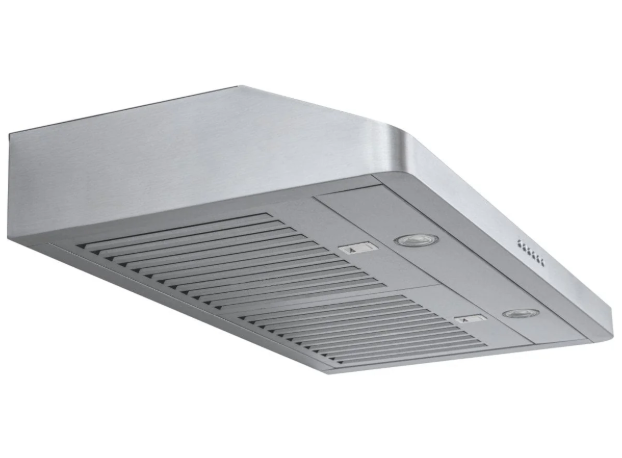
A 30-inch cooking surface is one of the most common configurations in residential kitchens, which makes selecting the right ventilation equipment especially important. Although width is usually the first specification homeowners notice, effective ventilation depends on far more than physical fit. Airflow, capture area, ductwork, filters, mounting position, and noise can all influence real-world performance. A properly selected 30 inch hood helps capture smoke, airborne grease, moisture, odors, and cooking particles before they spread into surrounding rooms. Instead of choosing a model solely by appearance or maximum CFM, homeowners should evaluate how the entire ventilation system will perform with their cooking habits and kitchen layout.
1. Match Hood Width to the Cooking Surface
Width directly affects how effectively a hood captures the plume of warm air rising from a cooktop.
For a standard 30-inch range positioned against a wall, a 30 inch hood generally provides baseline coverage when properly positioned over the cooking surface. The hood should not be narrower than the range because smoke and grease produced near the outer burners may escape around its edges.
A wider hood can sometimes provide additional capture, particularly for high-output cooking or installations where cabinet space allows it. Island installations can require even greater coverage because rising contaminants are exposed to cross-currents on all sides rather than being partially contained by a wall.
Before purchasing a hood, measure both the cooking appliance and the space between adjoining cabinets. Physical dimensions should also be checked carefully because the nominal width may differ slightly from the exact product dimensions.
2. Choose CFM According to Cooking Demand
CFM, or cubic feet per minute, measures how much air the blower is capable of moving. Higher airflow can be useful for cooking methods that generate significant smoke, heat, and grease, but more CFM is not automatically better.
The Home Ventilating Institute recommends approximately 100 CFM per linear foot for wall-mounted residential ranges. For a 30-inch wall-mounted hood, HVI lists 250 CFM as its recommended ventilation rate and 100 CFM as the minimum in its general residential guidance. Professional-style cooking equipment may require different ventilation based on the appliance manufacturer’s specifications.
When selecting a 30 inch hood, consider:
1. Frequency of frying or searing
2. Number of burners used simultaneously
3. Gas versus electric cooking
4. Burner heat output
5. Kitchen layout
6. Hood mounting location
7. Duct length and resistance
Light simmering creates a much smaller ventilation load than wok cooking, grilling, or repeated high-heat searing.
Multiple fan speeds can also be useful. Lower settings provide quieter everyday ventilation, while higher speeds can handle periods of heavier cooking.
3. Prioritize Efficient Duct Design
A powerful blower connected to poorly designed ductwork may perform worse than a lower-CFM system with an efficient exhaust route.
The Home Ventilating Institute recommends metal ducting and states that smooth metal duct is preferable to flexible metal because ridges in flexible duct create turbulence and reduce airflow. It also recommends matching duct size to the fan outlet, keeping duct runs short, and minimizing bends.
For a 30 inch hood, efficient duct planning typically means:
1. Using the manufacturer’s recommended duct diameter
2. Keeping the route as short as practical
6. Limiting elbows and sharp turns
4. Using smooth metal duct
5. Sealing connections properly
6. Venting directly outdoors
Every turn introduces resistance. HVI guidance on residential ventilation ducting also illustrates how elbows and fittings reduce the allowable effective duct length of ventilation systems.
Duct layout should therefore be planned before cabinets and finishes make modifications difficult.
4. Check Whether Makeup Air Is Required
Powerful kitchen exhaust systems remove indoor air from the house. That air must ultimately be replaced.
This becomes particularly important in tightly constructed homes and buildings containing certain fuel-burning appliances. Excessive negative pressure can affect ventilation performance and may create concerns involving combustion appliances.
The 2024 International Residential Code requires makeup air under specified conditions when a kitchen exhaust system is capable of exceeding 400 CFM and qualifying gas, liquid, or solid-fuel-burning appliances are located within the dwelling’s air barrier. Where required, replacement air must be supplied at approximately the exhaust rate.
Local requirements can differ because jurisdictions adopt and amend codes independently.
If a high-capacity 30 inch hood is being installed, especially during a renovation involving HVAC or combustion equipment, homeowners should confirm applicable requirements with a qualified contractor or local building authority.
5. Compare Filter Design and Maintenance Needs
Range hood filters capture grease before it reaches internal blower components and ductwork.
Common types include mesh and baffle filters. Their construction differs, but both require regular maintenance to maintain effective airflow.
The EPA recommends routinely cleaning range hood grease filters as part of improving indoor air quality during cooking. It also advises operating an outdoor-vented range hood whenever cooking and continuing ventilation for 10 to 20 minutes afterward.
Maintenance frequency depends on cooking habits. A household that regularly fries, grills, or sears food may need more frequent cleaning than one that primarily boils or simmers.
Before selecting a 30 inch hood, check:
1. Whether filters are removable
2. Whether they are dishwasher-safe
3. Recommended cleaning frequency
4. Replacement requirements
5. Accessibility for routine maintenance
Easy-to-clean filters make regular maintenance more practical and help prevent grease accumulation from gradually restricting airflow.
6. Consider Noise and Real-World Usability
Maximum ventilation performance has limited value if the hood is so loud that occupants avoid using it.
Range hood noise is often rated in sones. According to HVI, hood sound is influenced by airflow, fan design, and the ductwork used to exhaust air outdoors. Properly sized and installed ducts can help reduce unwanted noise.
A good buying decision should therefore consider noise ratings at normal cooking speeds rather than focusing exclusively on the maximum fan setting.
This matters because ventilation works best when used consistently. The EPA recommends turning an outdoor-vented hood on whenever cooking and using back burners where practical because hood capture tends to be better there. Cooking itself can generate indoor particulate matter, and outdoor-vented range hoods can substantially reduce exposure.
A 30 inch hood that operates comfortably at everyday speeds may therefore provide better practical ventilation than an unnecessarily powerful model that is rarely switched on.
Conclusion
Selecting the right range hood requires looking beyond width and comparing airflow, capture area, duct configuration, filter maintenance, noise, and applicable makeup-air requirements. Understanding What are the Range Hood Parts? can also make it easier to evaluate how the blower, filters, controls, lighting, duct connection, and other components contribute to overall ventilation performance. For a standard 30-inch cooking area, a properly sized and efficiently ducted 30 inch hood can provide effective everyday ventilation while helping control smoke, grease, moisture, odors, and airborne cooking particles.
