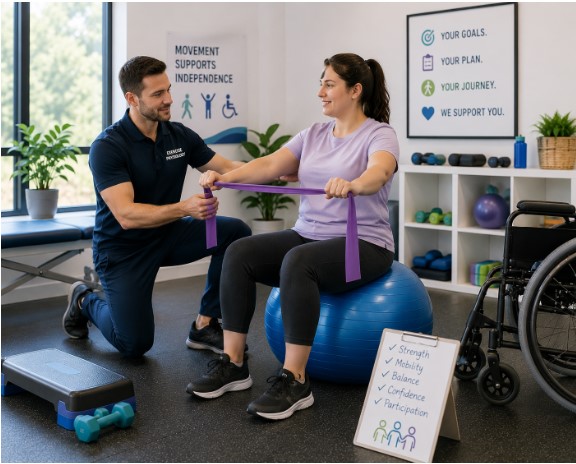
Movement can support independence, confidence, participation, and long-term health, but the right plan must reflect the person rather than a generic fitness template. For NDIS participants, goals may relate to getting around the community, managing fatigue, building strength, reducing falls risk, returning to an activity, or feeling more confident with everyday tasks.
Exercise physiology in NDIS settings provides individualised assessment and movement support that can be connected to these goals. An accredited exercise physiologist can consider health conditions, function, sensory needs, routines, equipment, and the environments in which a participant wants to feel more capable.
Start with the Person’s Goal
A meaningful programme begins with what matters to the participant. Someone may want to walk further at the shops, transfer more easily, manage stairs, join a social activity, or tolerate a work day with less fatigue. These goals guide the assessment and make the plan more relevant than exercise chosen only because it is common.
Exercise physiology in NDIS services can also help translate broad plan goals into practical activities that can be practised consistently.
The clinician may look at strength, balance, mobility, endurance, coordination, pain, confidence, and activity history. They can also speak with support coordinators, families, carers, allied-health professionals, and plan managers where the participant agrees. This broader picture helps make recommendations practical and coordinated.
How Sessions Can Be Adapted
Exercise physiology in NDIS plans can be delivered in a clinic, home, community, gym, or another suitable setting depending on the participant’s needs and funding arrangements. Sessions can be adapted for communication preferences, sensory requirements, mobility aids, fatigue, anxiety, or the need for a support person to be involved.
The programme may include strength, balance, mobility, cardiovascular conditioning, functional task practice, education, or a home routine. The key is that exercises have a purpose. For example, sit-to-stand practice can support transfers, while balance work may be linked to safer walking outdoors.
Why Gradual Progress Matters
Building capacity takes time, especially when disability, chronic pain, neurological conditions, or long periods of inactivity are involved. The right level of challenge should be enough to create adaptation without making recovery unmanageable. Regular review allows the practitioner to adjust the plan as symptoms, confidence, and goals change.
Regular exercise physiology in NDIS reviews allow the programme to change when a participant’s needs, confidence, or supports change.
Progress can be measured in practical ways: walking a little farther, completing a household task with less assistance, having more energy after an outing, or using public transport with greater confidence. These outcomes are often more meaningful than a number on a gym machine.
Helpful Questions for the First Appointment
- What NDIS goals could movement support?
- What environments feel most comfortable for sessions?
- Are there medical or sensory considerations the clinician should know?
- Can a family member, support worker, or coordinator be included if desired?
The participant should remain central to every decision, including the intensity, setting, and style of movement support.
- How will progress be recorded and reviewed?
A Collaborative Way Forward
Good support is collaborative. Participants should understand why they are doing an activity, have choices about how it is delivered, and be able to tell the clinician when something does not feel right. Exercise should support autonomy, not create another rigid obligation.
For participants seeking Leichhardt physiotherapy alongside exercise support, The Movement EP brings physiotherapy and exercise physiology together in a goal-focused setting. The team can help participants, families, and support networks build a practical plan that connects movement with daily function, confidence, and meaningful community participation.
Small gains can build over time when the plan is clear, respectful, and connected to everyday routines.
Looking Ahead
Exercise physiology in NDIS services works best when goals are personal, sessions are adaptable, and progress is measured in ways that matter to the participant. With a clear plan and regular review, movement can become a useful tool for building functional capacity, confidence, and participation in everyday life at a pace that feels achievable.
